Our Visit To Laguna de los Flamingos in Isabela Island, Galapagos
Quick Facts About Laguna De Los Flamingos
| Where | Isabela Island, in the lagoons and wetlands just west of Puerto Villamil |
|---|---|
| Getting there | By bike or by taxi from town; a bike was rented after the visit to the tortoise reserve |
| Best time of day | Early morning, when the most flamingos are wading in the shallows |
| Other birds | Pintail ducks, stilts and large-billed flycatchers |
| Not to confuse with | Punta Cormorant, which lies on Floreana Island and has its own flamingo lagoon |
Our Take On Laguna De Los Flamingos
We saw the largest concentration of flamingos in the Galapagos at Laguna de Los Flamingos on Isabela Island. We rented a bike to get there after visiting the tortoise reserve. Watching a few flamingos forage through the mud was a serene and memorable sight for us.
Spotting flamingos in the Galapagos was an unexpected treat for us during our trip. The vibrant Galapagos flamingo, one of the most stunningly pink flamingos in the world, has adapted in fascinating ways to thrive in this unique environment. Although the species here is limited, there’s a strong chance that we’d get to see them during our Galapagos adventure.
One of the best spots where my wife and I were lucky enough to see these beautiful birds up close was Laguna de Los Flamingos on Isabela Island.
We’ve visited Flamingo Lagoon as a part of our Galapagos Islands Trip:
Where Is The Best Place To See Pink Flamingos?
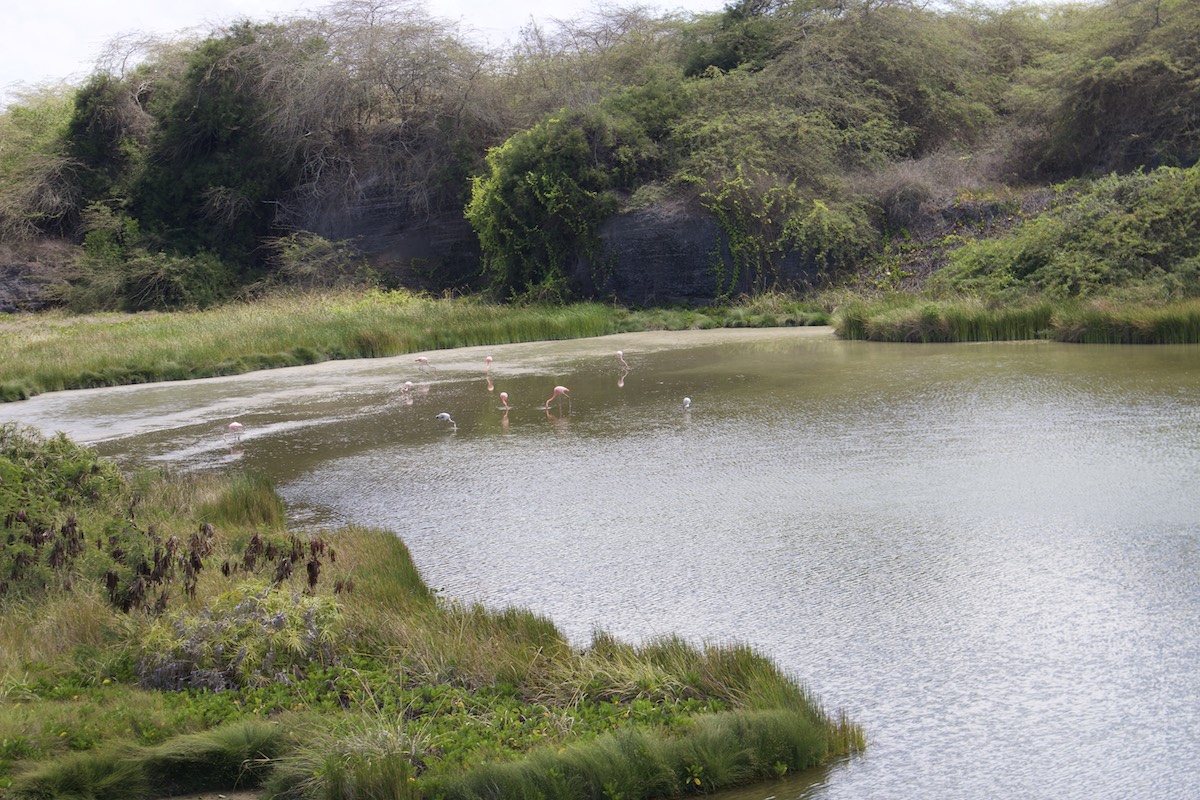
Laguna de los Flamingos on Isabela Island is one of the best spots. It sits among salt and brackish lagoons west of Puerto Villamil, which hold the largest concentration of flamingos in the Galapagos. We got there by renting a bike after the tortoise reserve, though taking a cab is also an option.
To the west of Puerto Villamil, we found a series of salt and brackish lagoons that are home to a variety of coastal and marine birds. Here, we also saw the largest concentration of flamingos in the Galapagos—a breathtaking sight!
We made our way to Laguna de Los Flamingos after visiting the tortoise reserve, renting a bike to get there, though taking a cab is also an option. This spot became one of our favorites on Isabela Island!
What Can You Expect At Laguna De Los Flamingos?
The lagoon lies in the wetlands next to Puerto Villamil on Isabela Island. Early in the morning, flamingos wade through shallow water and sift the mud for shrimp, which gives them their pink colour. Each pair lays a single egg and both parents care for it. Pintail ducks, stilts and large-billed flycatchers also appear here.
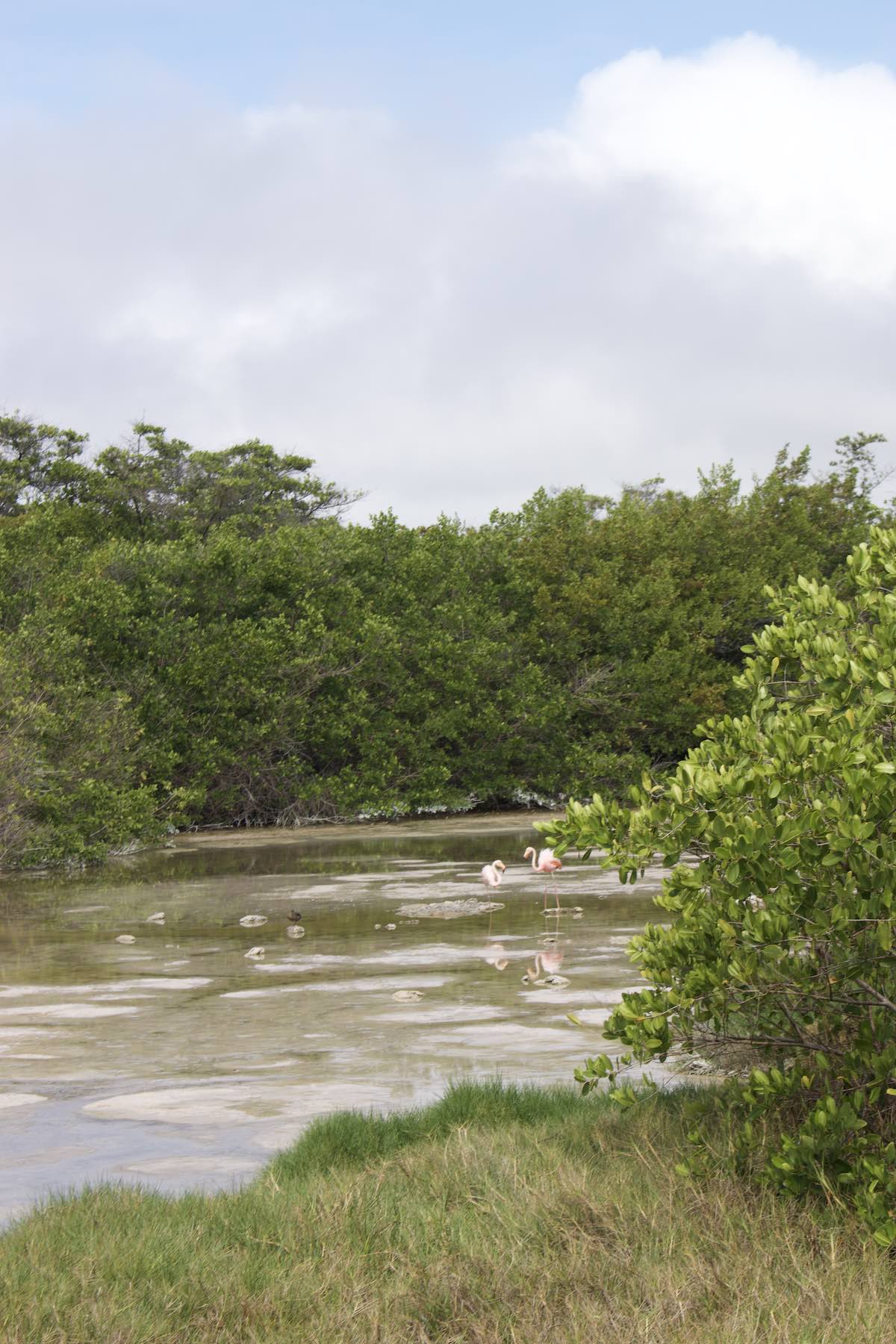
This lagoon is one of the salt and brackish lagoons in the wetlands next to Puerto Villamil on Isabela Island. We recommend visiting early in the morning, as that’s when you’ll see the most flamingos wading gracefully across the shallow waters.
In the lagoon, we watched a few flamingos elegantly foraging through the mud, sifting for shrimp as they made their way through the brackish water. It was a serene and memorable sight to witness these vibrant pink birds in such a natural, untouched setting.
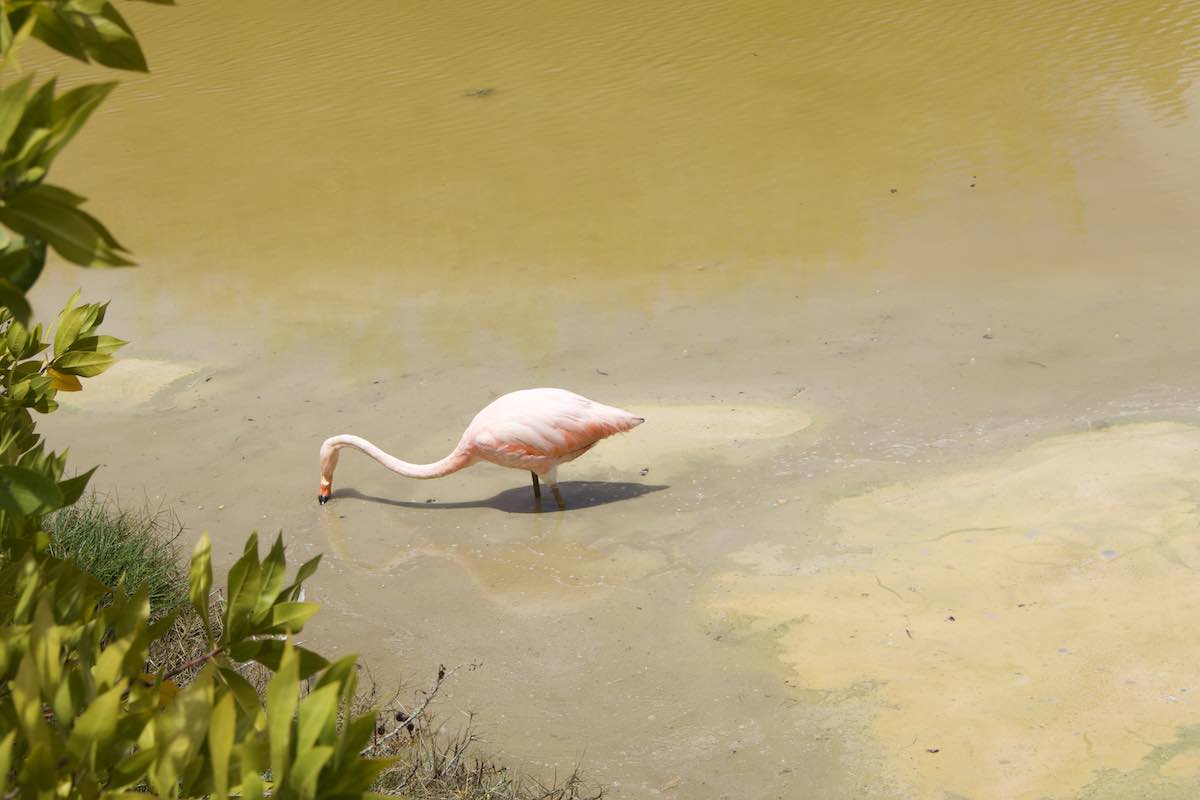
These flamingos are similar to those found in the Caribbean, with their striking pink hue coming from their diet of shrimp and crustaceans. Each pair only lays a single egg, and both parents share the responsibility of caring for it. If one parent is lost, the egg is at greater risk, as the remaining parent has to leave it unattended while finding food. This delicate balance adds to the species’ vulnerability.
Besides flamingos, we also spotted various other shorebirds, including pintail ducks, stilts, and large-billed flycatchers, which added to the rich birdwatching experience.
What Is The Best Time To See Flamingos?
Flamingos can be seen year-round at Laguna de los Flamingos. The nesting season, from March to July, is the time for courtship dances and a glimpse of hatchlings, when the birds perform their mating displays. Early morning is when the most flamingos are wading in the shallows.
Flamingos can be seen year-round at Laguna de Los Flamingos, but if you want to catch their fascinating courtship dances and glimpse hatchlings, plan to visit during the nesting season from March to July. This time of year offers a special treat, as you’ll see these elegant birds performing their intricate mating displays, a highlight of any Galapagos trip.
How Do Flamingos Behave At Laguna De Los Flamingos?
Flamingos are timid, so visitors should keep their distance and make little noise. During the breeding season they perform a collective courtship dance, flapping their wings, swinging their necks and calling, with other couples joining in. Flamingos can only eat with their heads upside down, first shuffling their feet to stir up possible food.
- Visitors to the Galapagos Islands are accustomed to encountering gentle wildlife that is unafraid of people. However, flamingos are quite timid, so stay your distance and make as little noise as possible.
- During the breeding season, Galapagos flamingos execute a stunning courtship dance. The courting of flamingos is a collective affair. The courting duo dances in unison, flapping their wings, swinging their necks, and calling to one another. Other flamingo couples join in on the fun, almost like a parade of flamingos.
- Flamingos, believe it or not, can only eat with their heads upside down! To eat, they first shuffle their feet around, stirring up particles that may be food.
Is Laguna De Los Flamingos Worth Visiting?
If there is some free time on Isabela Island, visiting Laguna de los Flamingos is well worth it. The birds are a sight to behold in their natural habitat, and seeing them feels like a once-in-a-lifetime experience. Anyone exploring the Galapagos should not miss the opportunity to watch them at this lagoon.
If you find yourself with some free time on Isabela Island, visiting Laguna de Los Flamingos, or Flamingos Lagoon, is well worth it. These fascinating creatures are a sight to behold, and getting a chance to see them in their natural habitat truly feels like a once-in-a-lifetime experience. Don’t miss the opportunity to marvel at these beautiful birds while you’re exploring the Galapagos.
Planning trip to Galapagos Islands?
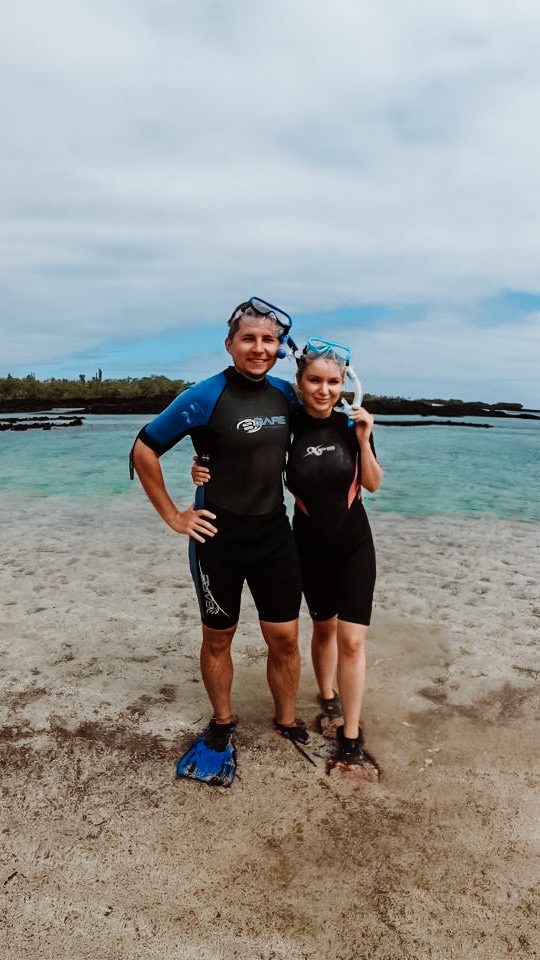
My wife and I spent two weeks on these magnificent islands, visited nearly every possible tour, and explored as much as we could. I shared all the important details in my comprehensive Galapagos Islands Travel Guide, where I cover everything you need to know about planning a trip to the Galapagos.
Galapagos Islands travel might surprise you with extra fees to enter the islands, the complicated logistics between islands, booking tours, and knowing which spots are free to explore and which ones are not. I’ve covered it all in this Galapagos Travel Guide.
Also, if you’re planning a trip to the Galapagos, make sure to use my link for discounted hotel prices via Booking.com. It really helps support my blog!
Questions About Laguna De Los Flamingos
What is the best time to see flamingos?
Flamingos can be seen year-round at Laguna de Los Flamingos. Early morning is when the most birds are seen wading across the shallow water. For courtship dances and hatchlings, the nesting season runs from March to July.
Where is the best place to see pink flamingos?
Laguna de Los Flamingos on Isabela Island, in the salt and brackish lagoons west of Puerto Villamil, is a top spot where the largest concentration of flamingos in the Galapagos was seen. The lagoon lies in the wetlands of southern Isabela, a Ramsar site since 2002.
What lake turns flamingos pink?
The pink color comes from the birds' diet, not the lake itself. Flamingos at the lagoon get their striking pink hue from eating shrimp and crustaceans, which they sift from the mud and shallow brackish water.