How We Visited Kicker Rock – León Dormido Galapagos Tour
Quick Facts About Kicker Rock
| What it is | A tall remnant of a volcanic tuff cone off San Cristóbal Island, also called León Dormido |
|---|---|
| Getting there | By boat only, always with a guide: a boat tour from San Cristóbal, the Tour 360 or a cruise that stops here |
| Boat ride | Roughly an hour to an hour and a half from Puerto Baquerizo Moreno |
| Snorkeling | Needs a National Park guide; best for experienced snorkelers, not recommended for children or beginners |
| Price | About USD 260 on GetYourGuide in 2026; tours bought on the islands can be 20 to 40 percent cheaper |
Our Take On Kicker Rock
We spotted dozens of Galapagos sharks gliding through the depths while snorkeling between Kicker Rock's towering formations. Watching them move beneath us was both nerve-wracking and awe-inspiring. That experience became one of the standout highlights of our entire Galapagos journey.
Kicker Rock, or Leon Dormido as it’s known locally, is an awe-inspiring rock formation off the coast of San Cristobal Island and is celebrated as one of the top snorkeling spots in the Galapagos. It’s a must-visit for anyone exploring the islands, offering both natural beauty and incredible marine life.
See where it sits on our Galapagos islands map, with every island and whether you reach it by day tour or only by cruise.
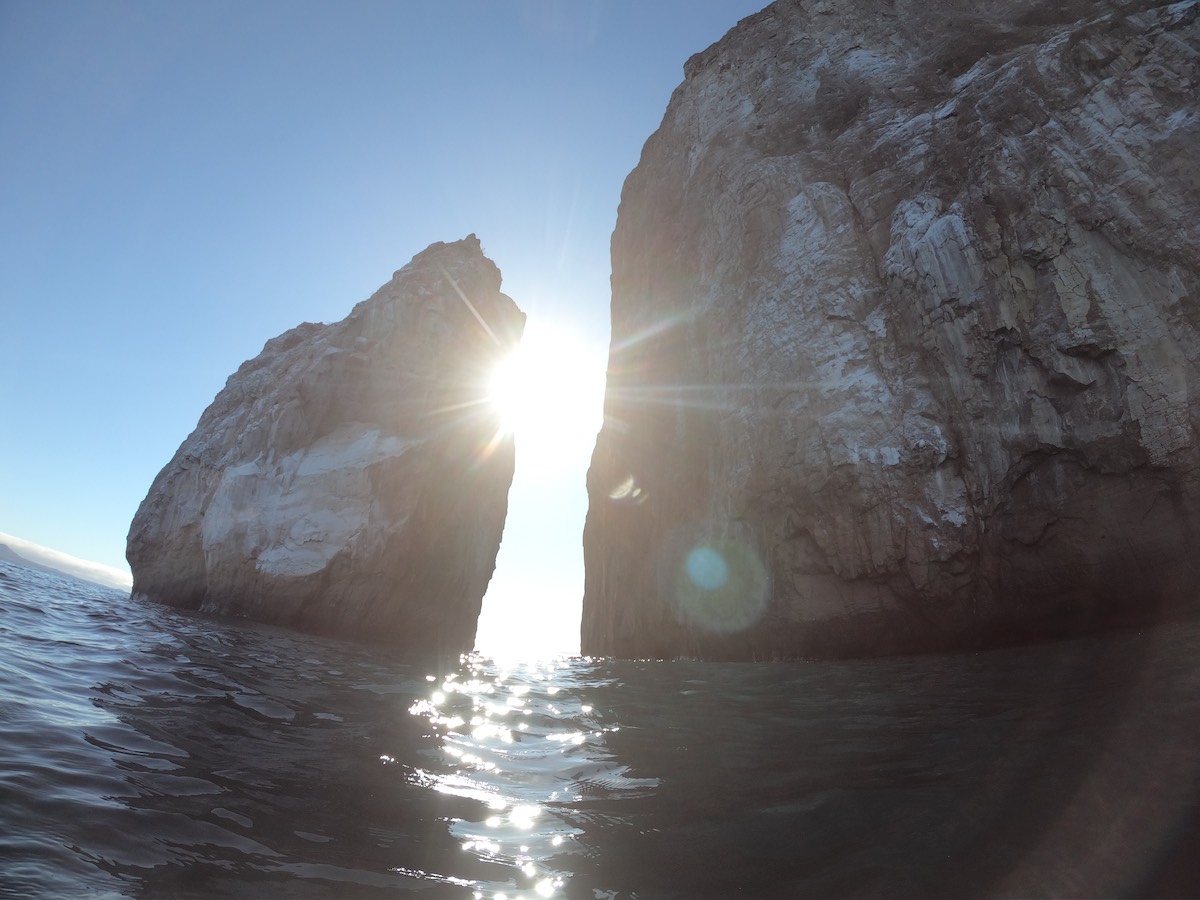
Located about an hour and a half northeast of Puerto Baquerizo Moreno, Kicker Rock is a towering remnant of a vertical tuff cone, reaching about 148 meters (485 feet) above the ocean’s surface. Accessible only by boat, visits here are always guided to ensure safe and respectful exploration of the area.
Over time, erosion has shaped Kicker Rock into its unique form, which some say resembles a shoe, hence the name. Others see it as the silhouette of a sleeping sea lion, or Leon Dormido in Spanish, adding a bit of Galapagos legend to the experience.
You can also check out video from Kicker Rock in my video:
What Wildlife Can You See At Kicker Rock?
Kicker Rock is home to many species. Marine birds such as blue-footed boobies, masked boobies and frigatebirds nest along the cliffs, and sea lions rest on the coast. Underwater, the area is known as one of the best places in the Galapagos to see Galapagos sharks, with hammerheads appearing occasionally.
Kicker Rock is a thriving habitat for a wide variety of species, so if you have the chance to visit, it’s an experience you won’t want to miss. Above the water, you’ll spot several kinds of marine birds soaring and nesting along the cliffs. We were lucky enough to see blue-footed boobies, masked boobies, and frigatebirds perched on the rock’s rugged edges, along with a few sea lions lounging along the coast.
The real magic, however, lies beneath the surface. Kicker Rock is renowned as one of the best places in the Galapagos to see Galapagos sharks in their natural environment, and with a bit of luck, you might even spot the occasional hammerhead shark cruising through these waters. It’s a breathtaking spot for anyone looking to dive into the fascinating underwater world of the Galapagos.
We witnessed sea turtles, marine iguanas, rays, Galapagos sharks, tropical fish, and even hammerhead sharks while snorkeling near Kicker Rock.
How Do You Get To Kicker Rock?
Kicker Rock is reached by boat only, always with a guide. Options include a Galapagos cruise that stops here, or a boat tour from San Cristobal Island, about an hour to an hour and a half from Puerto Baquerizo Moreno. Tours include a snorkeling stop plus a beach break, or the Tour 360 circuit.
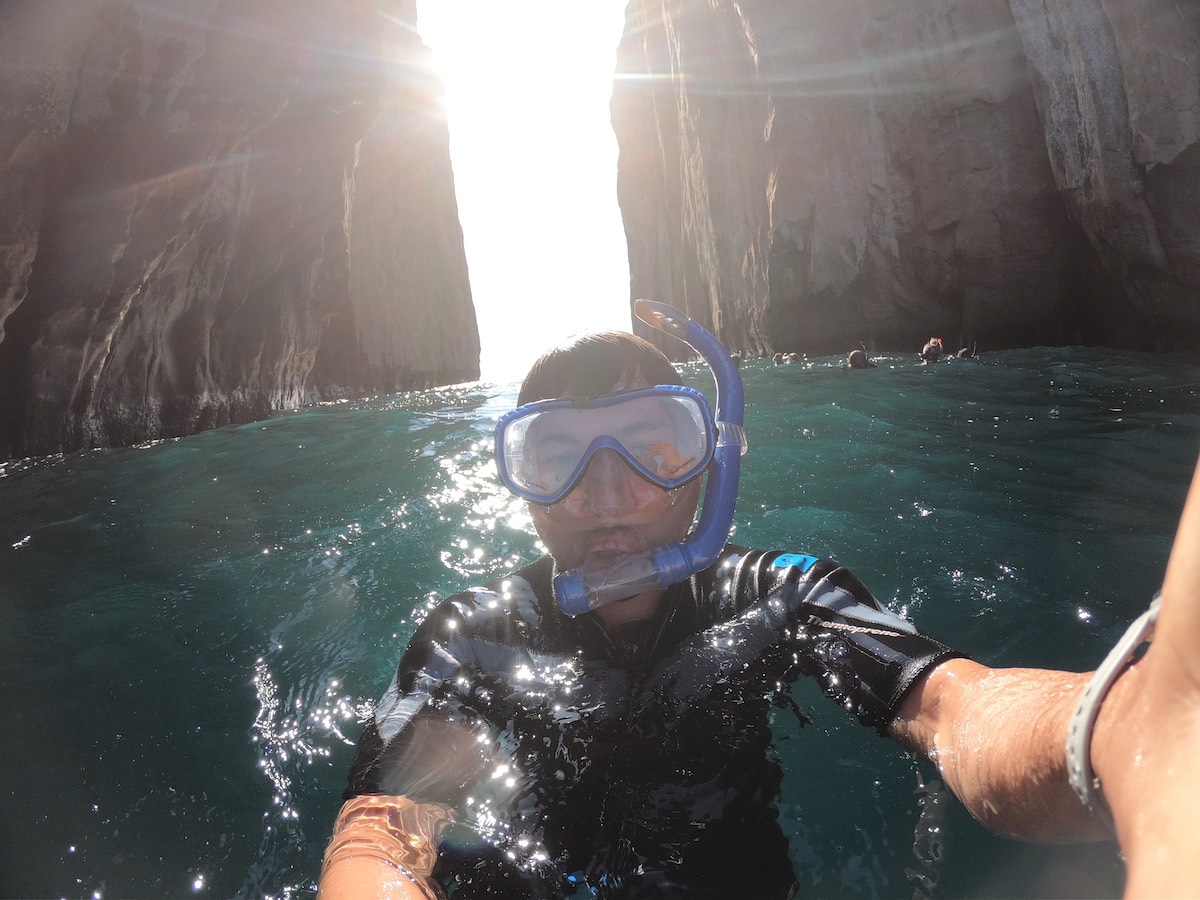
There are two main ways to reach Kicker Rock in the Galapagos: you can either take a Galapagos cruise that includes a stop at León Dormido or book a boat tour from San Cristobal Island.
From San Cristobal, there are two types of boat tours available. The first is a straightforward trip that includes a boat ride to Kicker Rock for snorkeling, followed by a relaxing break on a nearby beach. Depending on the day, this beach stop might be at Puerto Grande, Cerro Brujo, or Manglecito, as determined by the Galapagos National Park’s guidelines.
Alternatively, the “Tour 360” offers a complete circuit around San Cristobal Island, which also includes a snorkeling stop at Kicker Rock.
Both of these tours provide everything you need for snorkeling: fins, masks, snorkel gear, and even a swimsuit, along with lunch served on board. Some excursions are tailored for both snorkelers and divers, while others are exclusive to snorkelers. This flexibility makes it easy to find the perfect Kicker Rock adventure to fit your interests.
Is It Safe To Swim With Galapagos Sharks?
Swimming with Galapagos sharks happens under guide supervision. Currents between the rock formations are strong, so the crew positions snorkelers on the sheltered side of the passage before letting them swim through the canal. Dozens of Galapagos sharks glide below, and hammerheads appear only occasionally. Snorkeling here suits experienced snorkelers, not children or beginners.
We visited Kicker Rock as a part of Tour 360. Snorkeling at Kicker Rock was one of the highlights of the tour and we all enjoyed our time there.
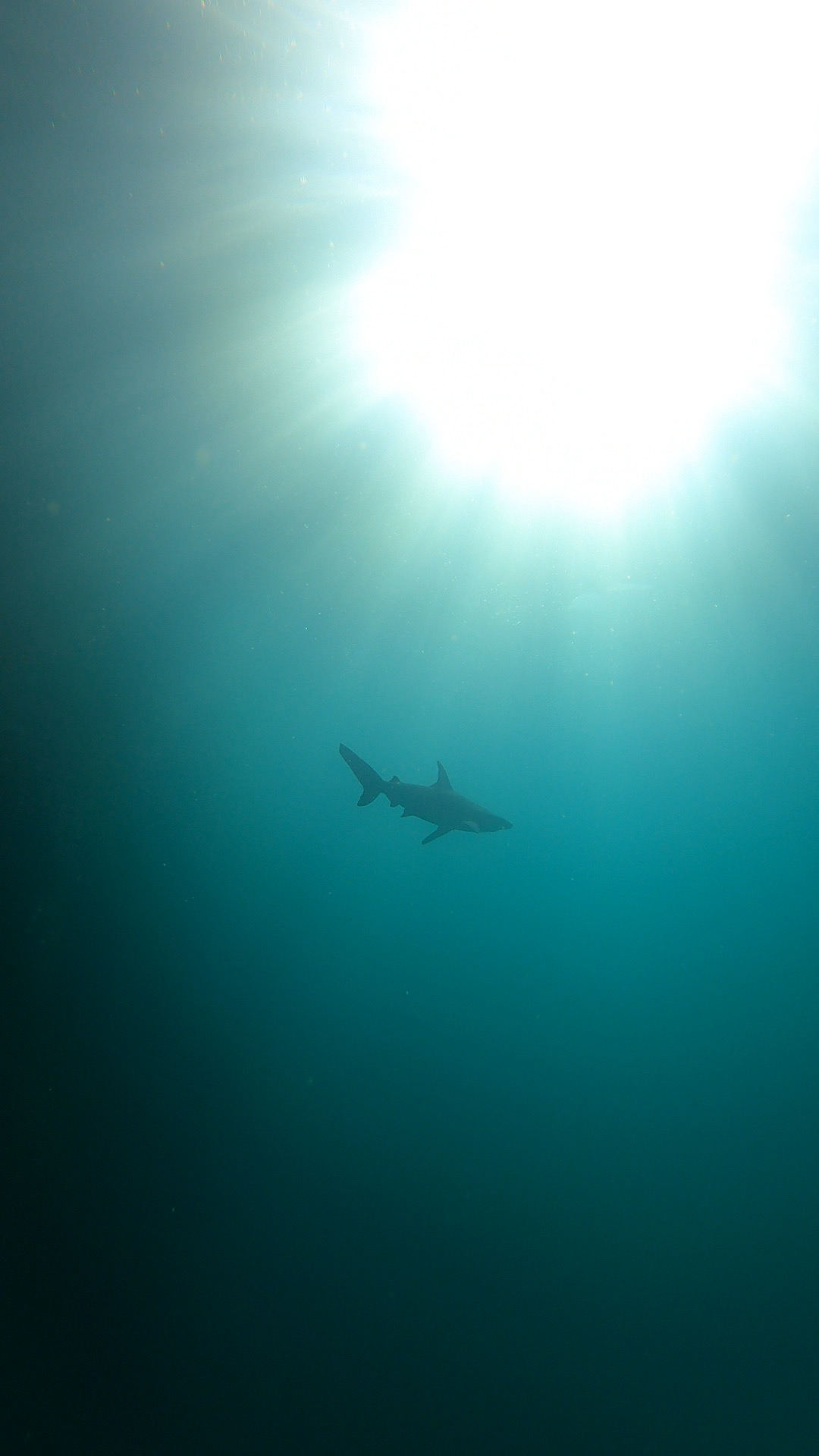
I hadn’t fully understood the intensity of the currents between Kicker Rock’s towering formations until we plunged into the water. The crew had carefully positioned us on the right side of the passage, where they gave us the go-ahead to swim toward the canal, navigating the shifting currents.
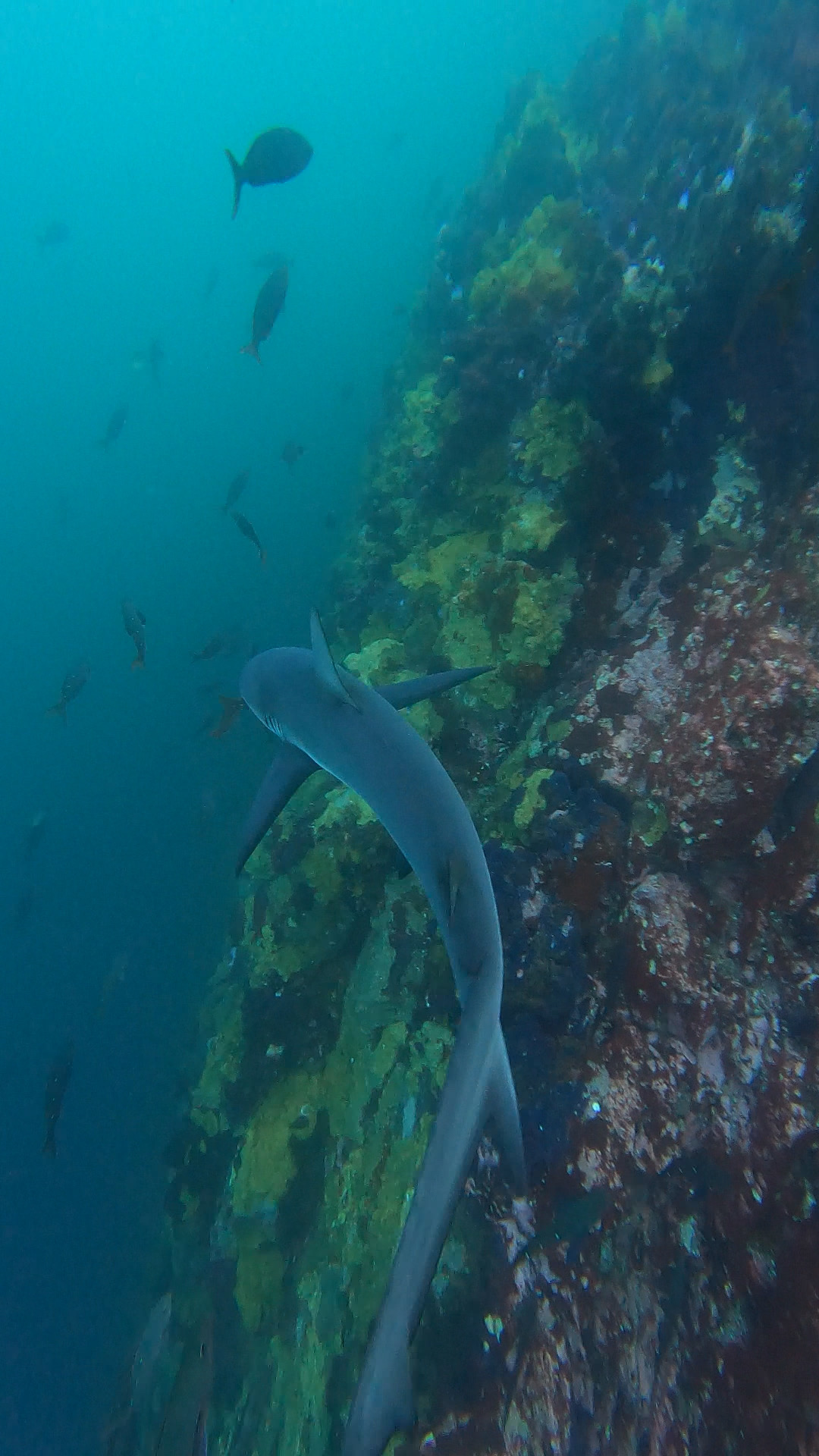
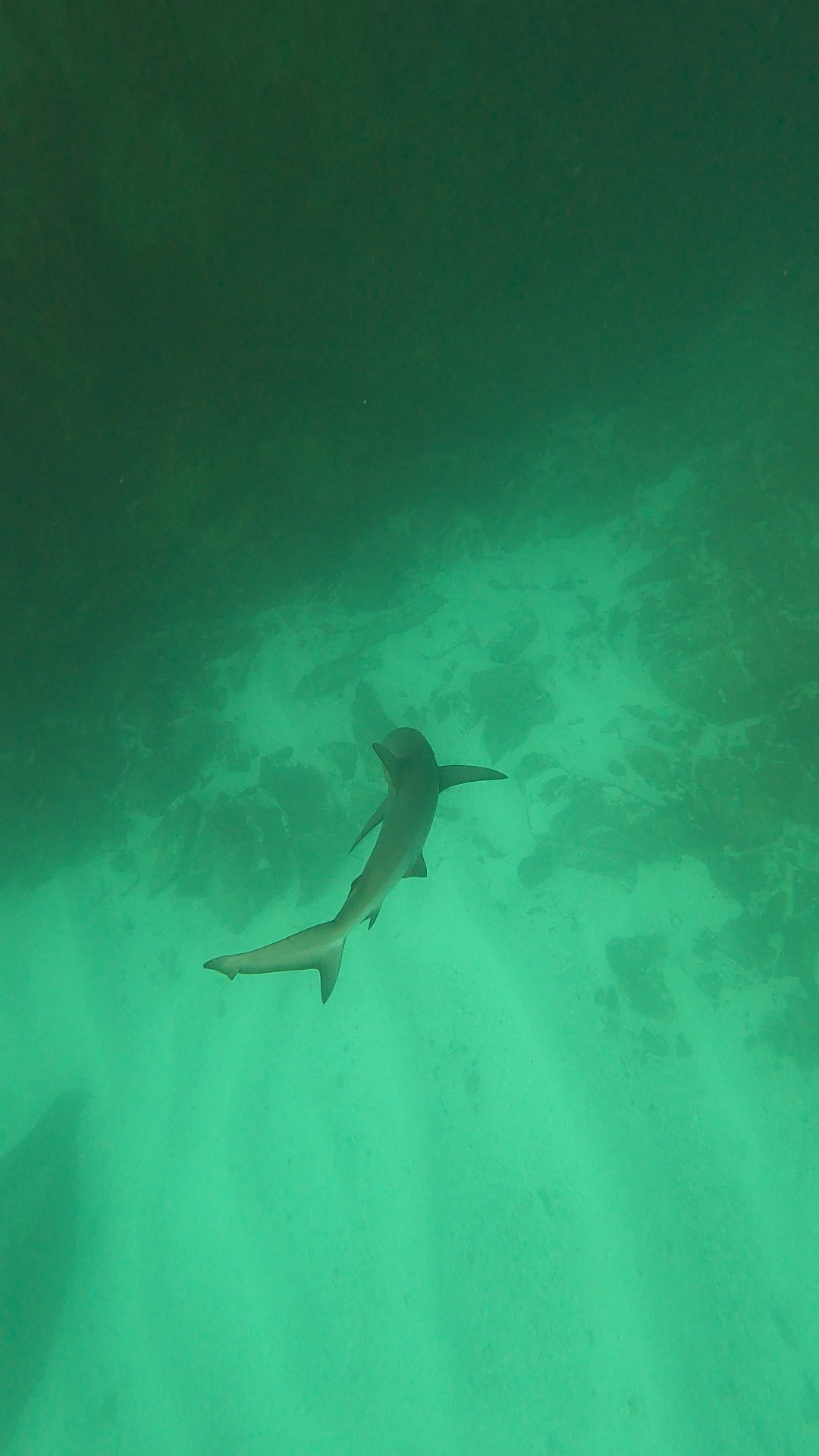
Peering down about twenty to thirty feet below, we spotted dozens of Galapagos sharks gliding through the depths. Our guides bravely dove down ten to fifteen feet to get closer, letting the sharks’ natural curiosity bring them near. Watching these incredible creatures move so gracefully beneath us was both nerve-wracking and awe-inspiring. It’s an experience that left us with a profound respect for the beauty and power of the Galapagos marine life.
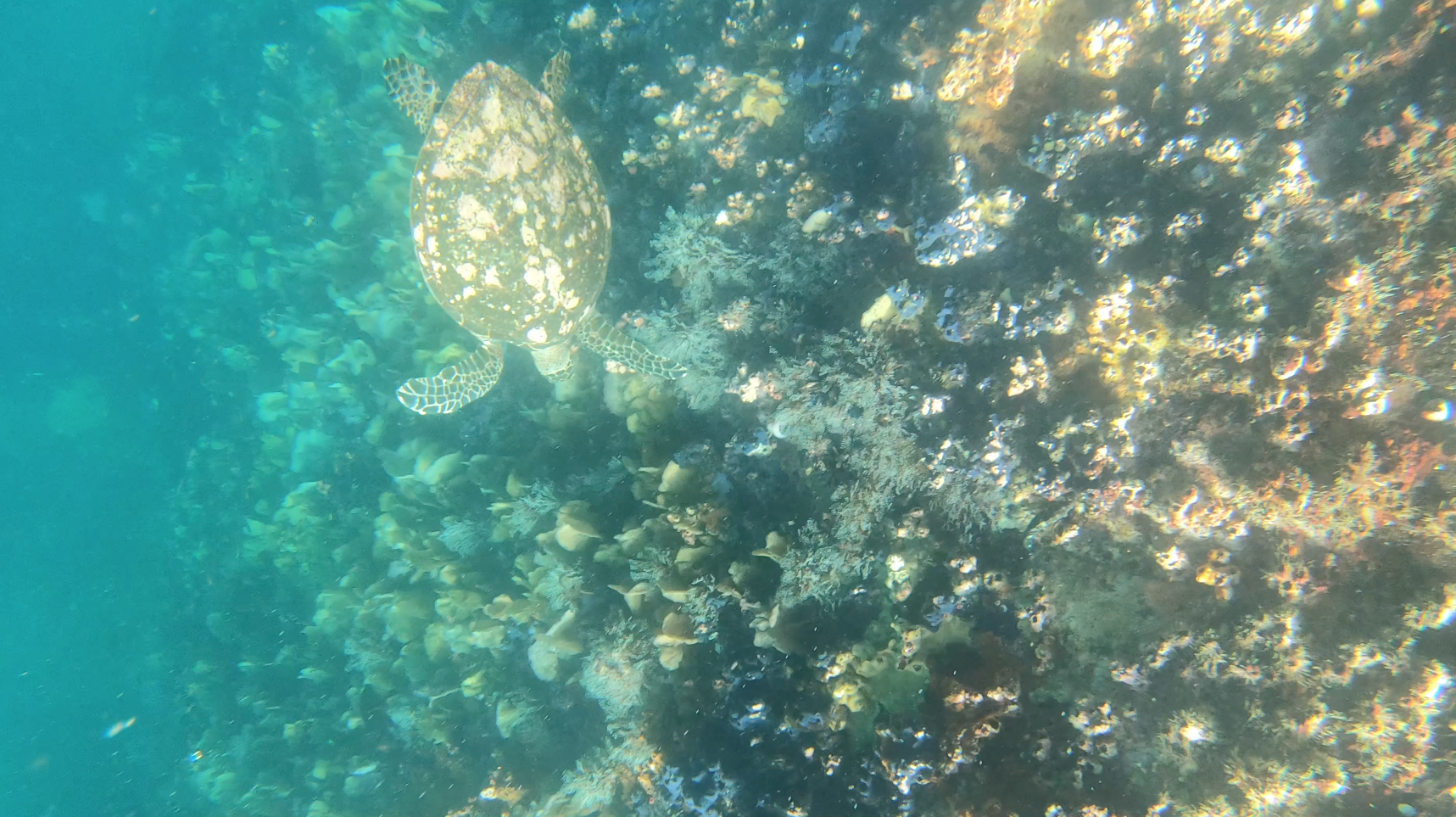
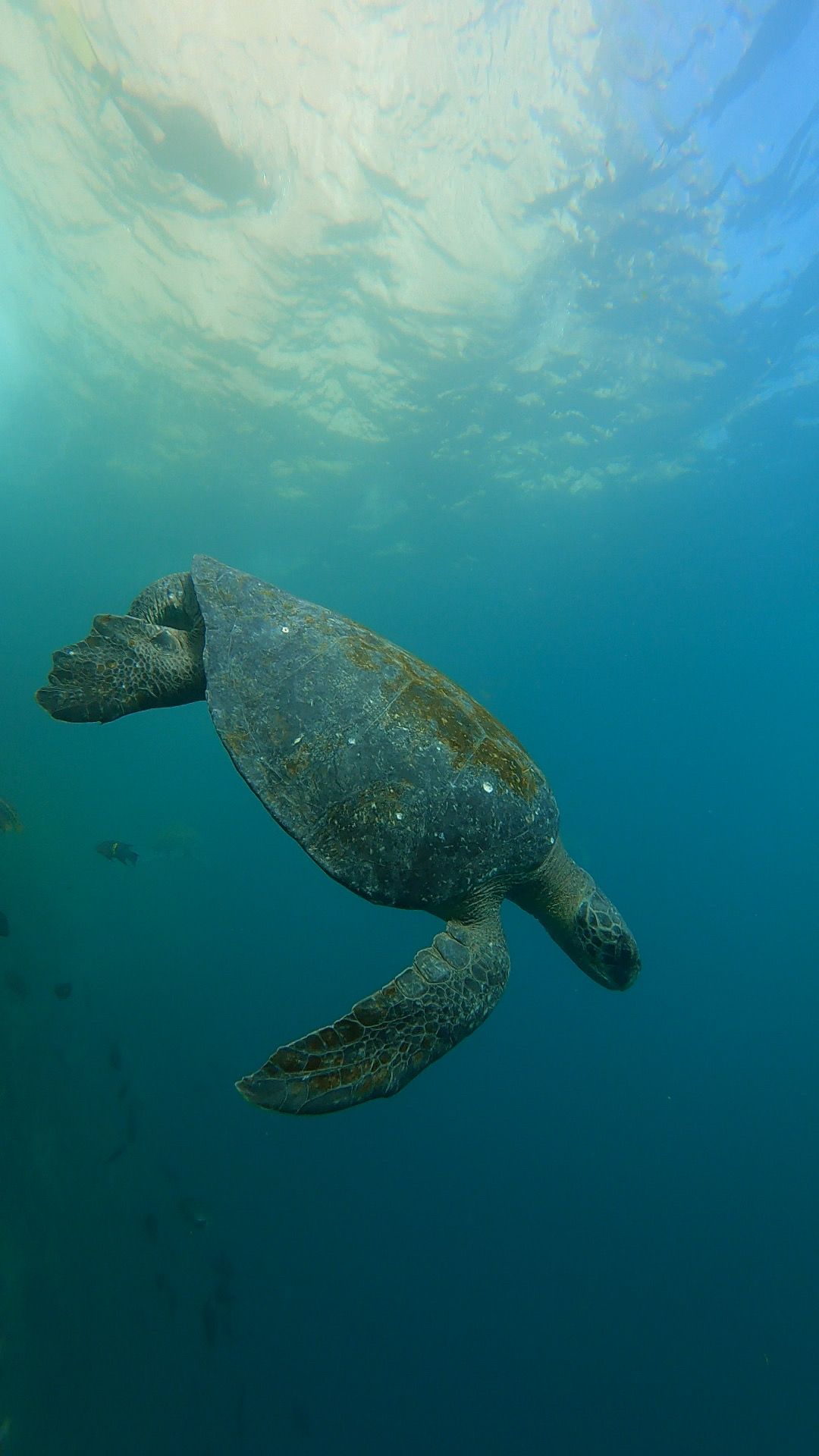
We were thrilled to come face-to-face with sea turtles as they glided gracefully around Kicker Rock, looking almost like they were flying through the water. They moved effortlessly along the rock walls, nibbling on algae, and occasionally mingling with the colorful reef fish that filled the area. It was mesmerizing to see so many vibrant species together, including Mexican hogfish, yellowtail surgeonfish, parrotfish, Sergeant major fish, pufferfish, hawkfish, rainbow wrasse, and countless others. The sheer diversity of marine life made the underwater world around Kicker Rock feel like a living, breathing work of art.
When Is The Best Time To Visit Kicker Rock?
The best months for diving near Kicker Rock are December to May, when the water is warmer and clearer and visibility is better. In colder months the water is chillier, but the abundance of marine life still makes snorkeling rewarding. Visibility varies with the currents, so conditions differ from day to day.
Full guide: Best Time To Visit The Galapagos: Month By Month
The best time to dive near Kicker Rock is from December to May, when the water is warmer and clearer, offering snorkelers optimal visibility to take in the incredible marine life. However, even if you visit during the colder months, the vibrant underwater scene more than makes up for the chilly water. Once you’re surrounded by the abundance of creatures swimming around, you’ll quickly forget about the lower temperatures as you get lost in the magic of Kicker Rock’s marine world.
What Should You Pack For A Kicker Rock Trip?
Useful items include sandals for hiking, a change of clothes, a swimming suit and gear, a water bottle, a hat and sunscreen, and a lightweight jacket for the return journey. A snorkeling suit helps, while tour operators usually provide a mask and fins.
- Sandals for Hiking
- A change of clothes
- Swimming suit and gear
- Water bottle
- A hat and sunscreen
- Snorkeling suit (tour operators usually provide mask and fins)
- A lightweight jacket for the return journey
Is It Possible To Snorkel At Kicker Rock?
Yes, snorkeling at Kicker Rock is possible with a National Park guide, since waves and currents make the offshore location demanding. The guide checks sea conditions and picks the calmest area. On calm days there is a narrow canal through the rock, about 6 meters wide, to swim through. It suits experienced snorkelers only.
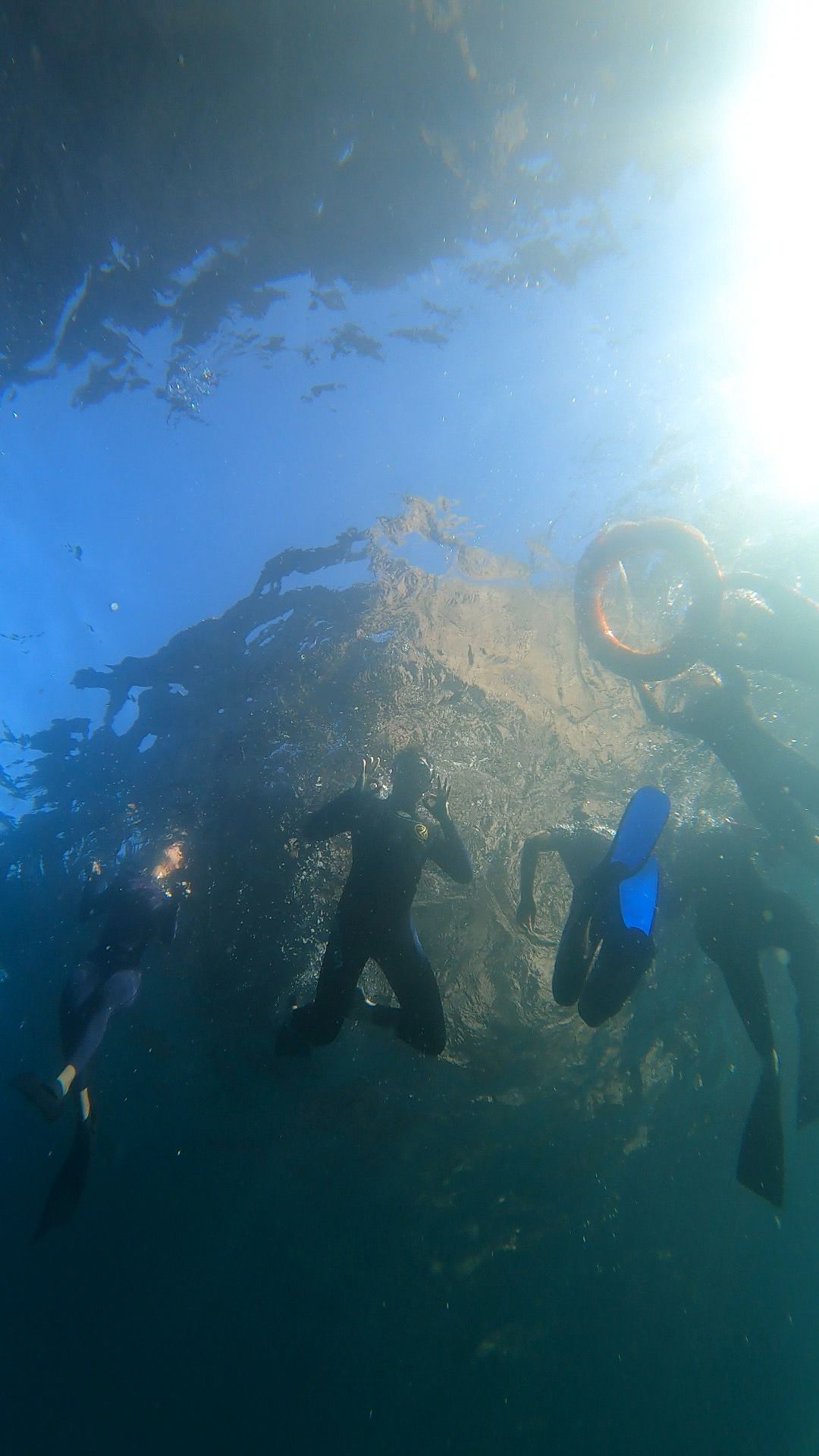
Snorkeling at Kicker Rock requires the guidance of a National Park guide, as its offshore location makes it susceptible to waves and currents. The guide assesses sea conditions carefully to choose the calmest area for snorkeling, ensuring a safer experience. On calm days, there’s a narrow canal through the rock, about 6 meters (20 feet) wide, where you can swim through and back out, adding an exciting element to the adventure.
It’s worth noting that visibility here can vary significantly depending on the currents, so some days are clearer than others. Given the challenging water conditions, varying visibility, and depth, Kicker Rock is best suited for experienced snorkelers, and it’s not recommended for children or beginners.
Is Kicker Rock Worth Visiting In The Galapagos?
For anyone seeking a snorkeling adventure in the Galapagos, Kicker Rock is hard to skip. The marine life and underwater landscapes make it a memorable stop, and for us it became one of the standout highlights of our entire Galapagos journey. Snorkeling there requires a guide and suits experienced snorkelers.
Kicker Rock is an absolute must for anyone seeking a truly breathtaking snorkeling adventure. This expedition became one of the standout highlights of our entire Galapagos journey. With its incredible marine life and unique underwater landscapes, Kicker Rock offers a diving and snorkeling experience that no explorer should miss. It’s a place that stays with you long after you’ve left, capturing the essence of what makes the Galapagos so extraordinary.
Planning trip to Galapagos Islands?
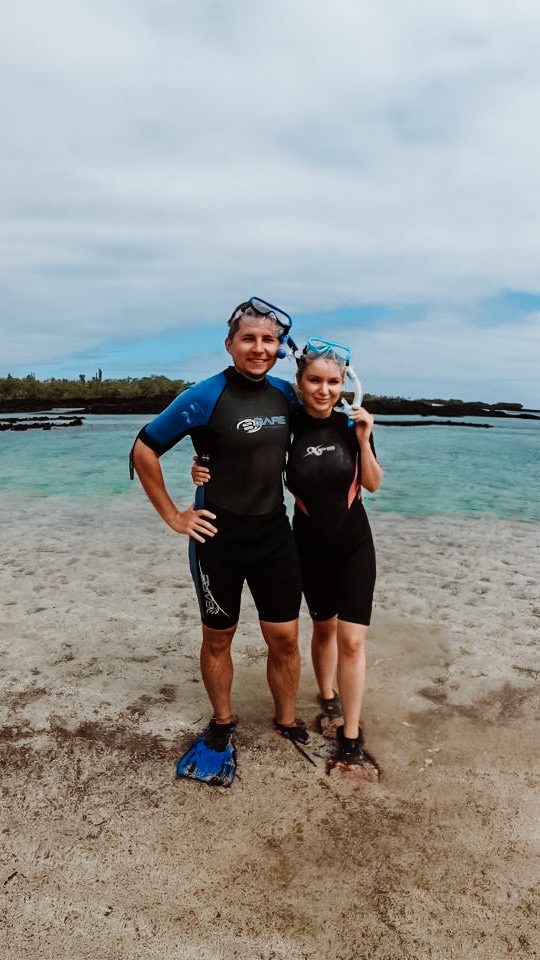
My wife and I spent two weeks on these magnificent islands, visited nearly every possible tour, and explored as much as we could. I shared all the important details in my comprehensive Galapagos Islands Travel Guide, where I cover everything you need to know about planning a trip to the Galapagos.
Galapagos Islands travel might surprise you with extra fees to enter the islands, the complicated logistics between islands, booking tours, and knowing which spots are free to explore and which ones are not. I’ve covered it all in this Galapagos Travel Guide.
Also, if you’re planning a trip to the Galapagos, make sure to use my link for discounted hotel prices via Booking.com. It really helps support my blog!
Questions About Kicker Rock
Is Kicker Rock worth it?
Yes, Kicker Rock is described as an absolute must for anyone seeking a breathtaking snorkeling adventure and one of the standout highlights of the Galapagos journey. It offers Galapagos sharks, sea turtles, rays and reef fish, and is best suited to experienced snorkelers.
Is it possible to snorkel at Kicker Rock?
Yes, but only with a National Park guide, since the offshore location is exposed to waves and currents. On calm days there is a narrow canal through the rock to swim through. It suits experienced snorkelers and is not recommended for children or beginners.
Is it safe to swim with Galapagos sharks?
Snorkeling is done with a guide who picks the calmest area. Dozens of Galapagos sharks can be seen below the group, an experience described as both nerve-wracking and awe-inspiring. No fatal shark attack has been recorded in the Galapagos.
Is there a Kicker Rock half-day tour available?
Yes, from San Cristobal there are boat tours that snorkel at Kicker Rock then stop at a nearby beach such as Puerto Grande, Cerro Brujo or Manglecito, set by the park's rules, and the Tour 360 circles the island with a snorkel stop. Both include snorkeling gear and lunch on board.