Visiting Bartolome Island Galapagos: Our Experience
Quick Facts About Bartolomé Island
| What it is | A small uninhabited volcanic island of about 1.2 km2 (120 hectares) in Sullivan Bay, off the east coast of Santiago, home to the Pinnacle Rock landmark. In Spanish: Isla Bartolomé |
|---|---|
| Summit climb | A wooden boardwalk and staircase of about 372 steps (sources say 360 to 375) to a 114 m viewpoint over Pinnacle Rock and the bay; allow 20 to 40 minutes up |
| Getting there | Day tours from Puerto Ayora on Santa Cruz via the Itabaca Channel (about 2 hours each way), or as a stop on many central-route cruises |
| Day tour price | About USD 245 to 495 per person in 2026 (GetYourGuide 495, Viator 384); recent Viator examples with Sullivan Bay run about USD 345 to 460 |
| Booking | A naturalist guide is mandatory and tours sell out early, so book ahead |
| Snorkeling | Around Pinnacle Rock from the north beach, with penguins, sea lions, reef sharks, rays and sea turtles |
| Landings | Dry landing at the pier for the summit trail, wet landing on the beach for snorkeling |
| Best time | Early morning for cooler hiking and soft light; the cool season from about June to December has the richest water |
Our Take On Bartolomé Island
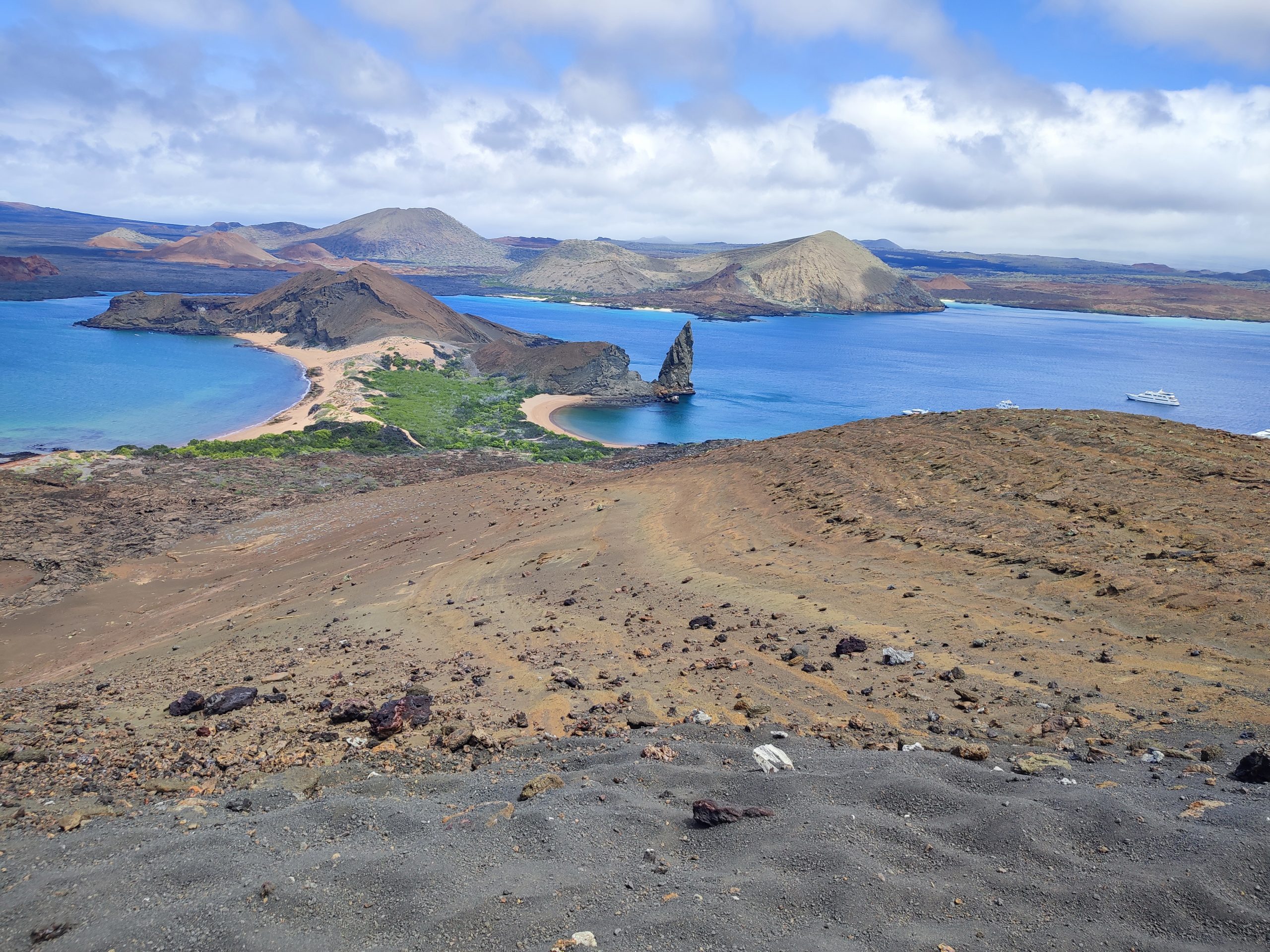
We climbed a 372-step wooden boardwalk to the summit of Bartolomé Island, and the view of Pinnacle Rock and the golden beach below felt postcard-worthy. We had expected a rocky, unappealing island, but we couldn't have been more wrong. The landscapes made the land, sky and water blend together like the pages of a picture book. We really suggest booking your tour online early, because the Galapagos National Park only allows a limited number of visitors each day.
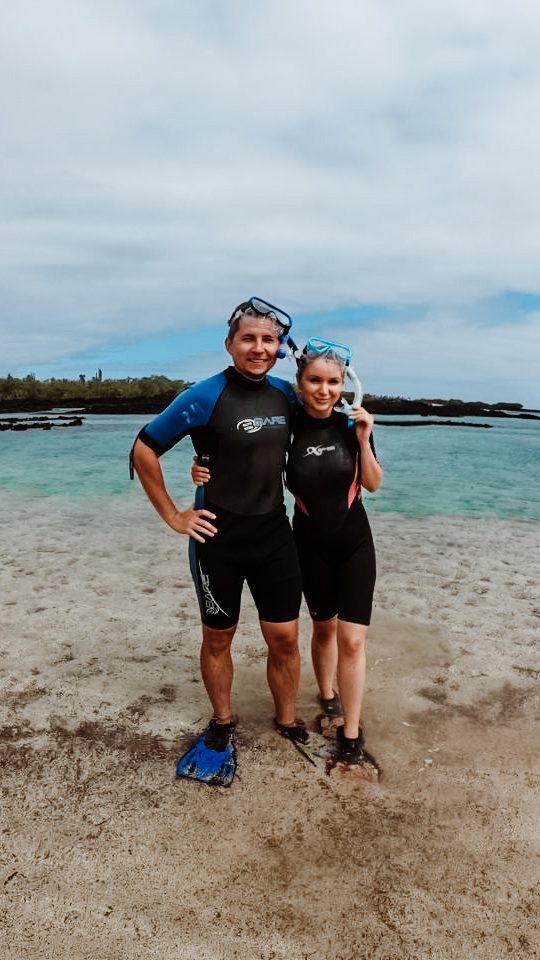
Bartoloméw Island, or Bartolome Island as we called it, is volcanic in nature, but that didn’t stop my wife and me from finding it a fantastic destination. It’s truly a must-see on any Galapagos adventure.
See where it sits on our Galapagos islands map, with every island and whether you reach it by day tour or only by cruise.
We initially thought it might be a rocky area constantly shaped by volcanoes, maybe lacking in visual appeal. But we couldn’t have been more wrong. Some of the landscapes were so breathtaking it felt like the green and brown of the land were reaching out to meet the blue sky. Nature created an intentional mosaic here that made the land, sky, and water blend together like the pages of a picture book.
Pinnacle Rock on Bartolome Island immediately caught our attention with its unique, uneven conical shape. Visible from afar, it feels like a guiding beacon for travelers heading toward the sea, a landmark that’s impossible to miss.
We loved the climb to the island’s peak, a journey that offered an adventure as rewarding as the breathtaking beauty surrounding us. Beyond Pinnacle Rock, the island also reveals its charm underwater, where the stunning landscapes above continue below the surface. My wife and I were eager to explore it all, knowing each corner held something new to uncover.
If you’re planning to visit Bartolome Island, remember to book your tour ahead of time! The Galapagos National Park only allows a limited visitors each day, so getting a tour can be tough once you’re on the islands, especially if you’re staying for less than a week. We really suggest booking your tour online early so you’re sure to get a spot. You won’t want to miss out on seeing Bartolome when you visit the Galapagos!
Bartolomé belongs to Ecuador as part of the Galapagos province, and in Spanish you will see it written Isla Bartolomé. This guide covers what Pinnacle Rock is, how to get here, the summit hike, the snorkeling, what is nearby and the mistakes that cost visitors the most. Prices and rules were checked in November 2026; where sources disagree you will see a range.
Where Is Bartolomé Island In The Galapagos?
Bartolomé is a tiny island in Sullivan Bay, just off the east coast of Santiago and north-west of Santa Cruz. It sits at roughly 0.29 degrees south, 90.55 degrees west, close to the equator. Because it is small, uninhabited and a national park visitor site, you reach it by boat from Santa Cruz or on a cruise, never on your own.
Seven pins around Bartolomé: the island, the nearby Sullivan Bay area, Sombrero Chino, and the Santa Cruz and Baltra gateways. Each pin opens our page where we have one.
Places on the map
- 1 Bartolomé Island
- 2 Santiago Island (Sullivan Bay)
- 3 Sombrero Chino
- 4 Santa Cruz Island
- 5 Baltra Island (airport)
- 6 North Seymour Island
- 7 Pinzón Island
What Is Pinnacle Rock And How Did It Form?
Pinnacle Rock is a tall, pointed rock rising from the sea beside the Bartolomé beaches and the single most photographed landmark in the Galapagos. It is the eroded remnant of a tuff cone, formed when magma met seawater, fragmented explosively and settled into layers of ash that waves later carved into a spire. The 114 m summit viewpoint gives the best view of it.
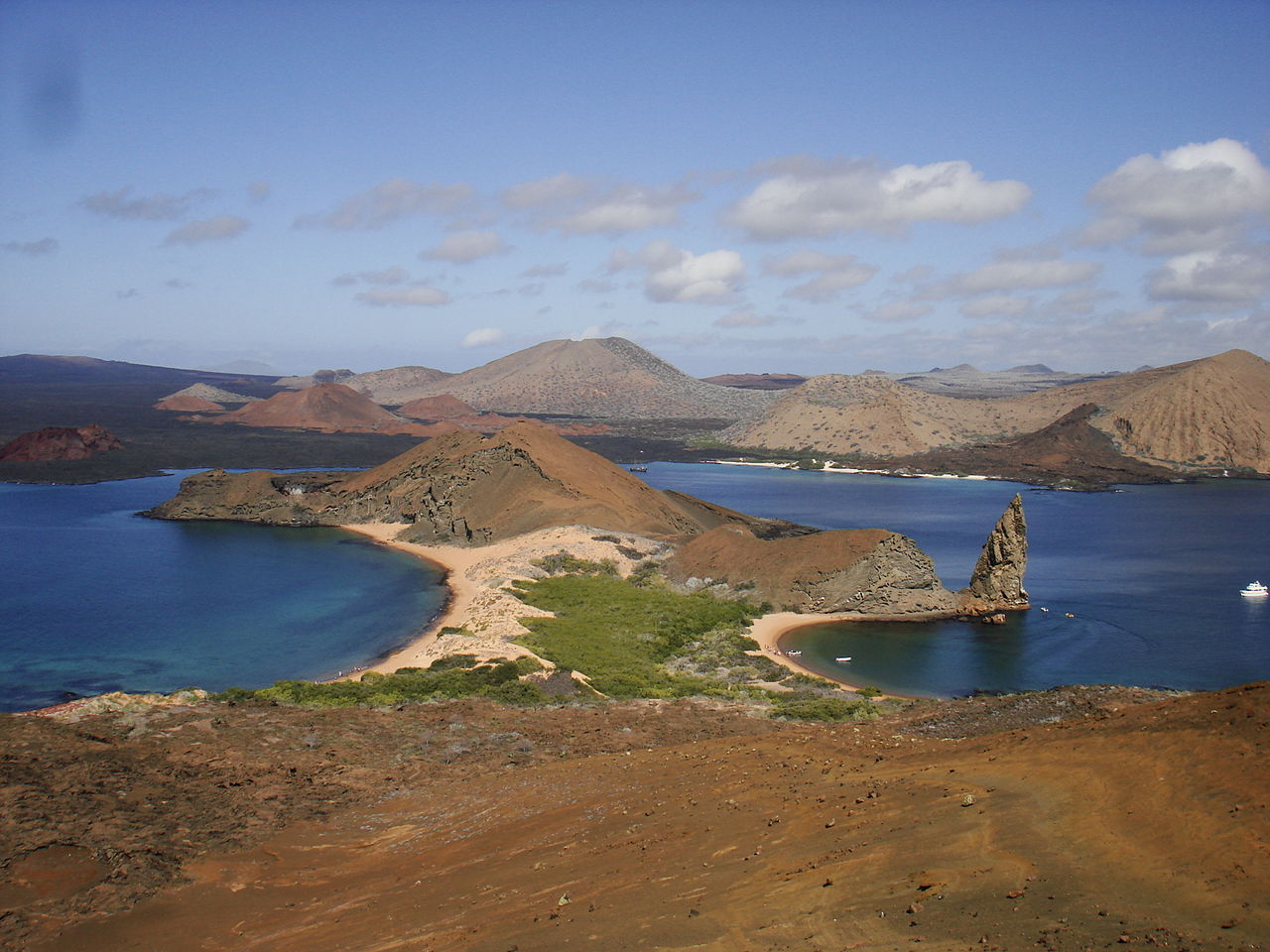
The shape is the reason people come. From the summit, Pinnacle Rock drops into the sea between two curved beaches, one on each side of a narrow neck of land, and the contrast between the black volcanic ground, the pale sand and the blue water makes it look like a model. Geologically it is a tuff cone remnant: a volcano that erupted where hot magma hit seawater, shattered into fine ash that welded into rock, and was then eroded by wind and waves until only the hardest core was left standing.
A popular story says the top of the rock was shaped by bombing practice during the Second World War, when aircraft from the air base on Baltra are said to have used it as a target. Reports of this are common in travel writing, but it is generally described as a legend rather than documented fact, so treat it as local lore.
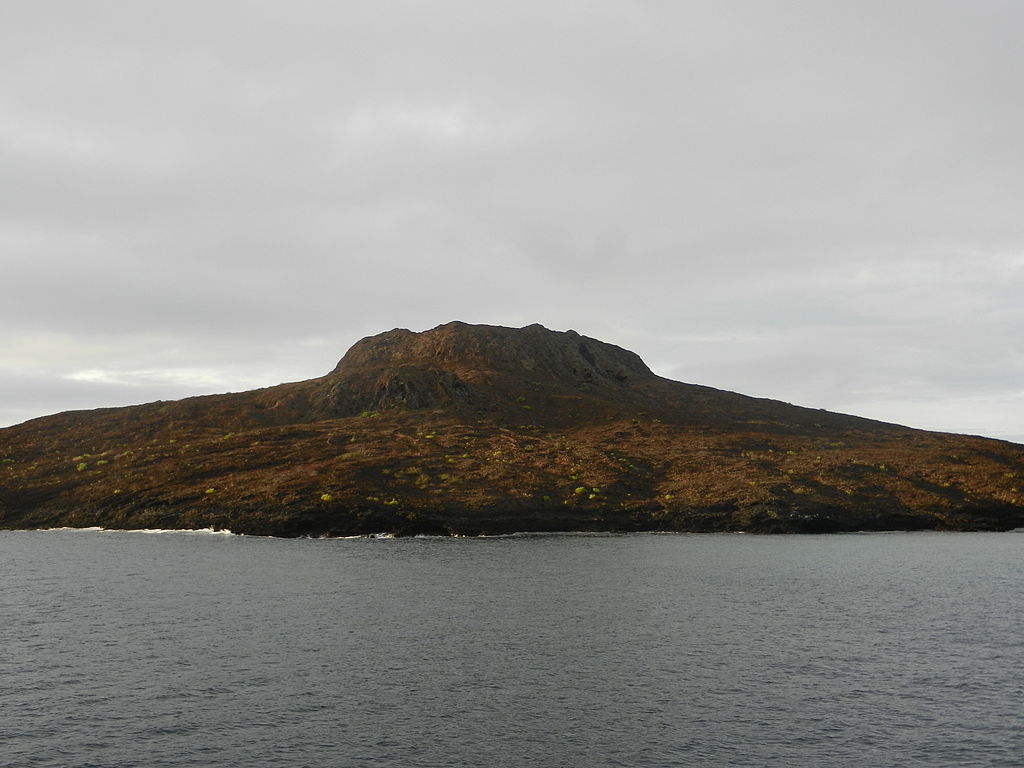
The island itself is young and sparse. It covers about 1.2 km2 and is named after Sir Bartholomew James Sulivan, a lieutenant and surveyor on HMS Beagle, the ship that carried Charles Darwin. Spatter cones, lava tubes and pioneer plants cover the ground, which is why the landscape is often compared with the surface of another planet. Our own walk across it felt just like that, as you can see in the photographs on this page.
Can I Take A Day Trip To Bartolomé Island?
Yes. Day tours run from Puerto Ayora on Santa Cruz Island, and many Galapagos cruises stop here as well. Because the Galapagos National Park limits visitors each day, tours can sell out early, so booking ahead matters. In 2026 a day tour costs about USD 245 to 495 per person.
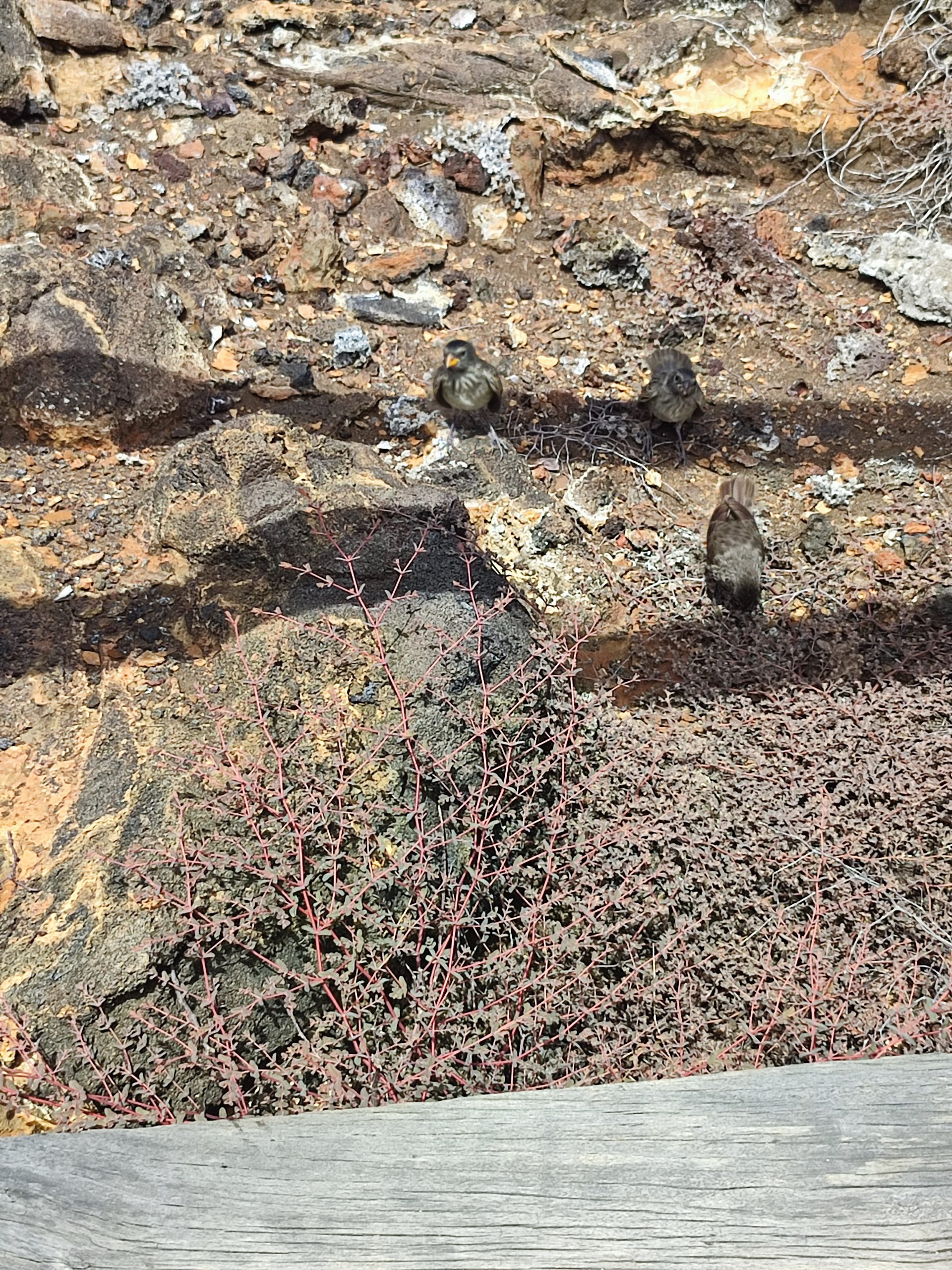
Bartolome Island is conveniently just a two-hour sail from the Itabaca Channel, making it an easy and memorable day trip from Puerto Ayora on Santa Cruz Island. It’s a must-see on any Galapagos Land Tour itinerary and a favorite stop for many Galapagos cruises. For us, the short journey was well worth it, knowing we were headed for one of the islands’ most iconic sites.
Day Tour From Santa Cruz Vs Cruise: Which Is Better For Bartolomé?
Both routes put you on the same trail with the same guide rules, but they trade time against cost and convenience. A day tour from Puerto Ayora suits visitors who sleep on land and want one big outing. Most listings leave in the early morning, take about two hours by boat each way and run 8 to 10 hours in total, often including a stop at Sullivan Bay and sometimes Sombrero Chino. A cruise, by contrast, usually visits Bartolomé as part of a central-islands itinerary and gives you more daylight at the sites plus a bed on board.
| Day tour from Puerto Ayora | Galapagos cruise | |
|---|---|---|
| How you arrive | Boat via the Itabaca Channel, about 2 hours each way | Overnight cruise passes through on a set itinerary |
| Time at the island | Part of an 8 to 10 hour day shared with other stops | More relaxed, often a morning or afternoon visit |
| Price (2026) | About USD 245 to 495 per person across listings; Viator examples with Sullivan Bay about USD 345 to 460 | Priced per cruise and cabin class, not per island; see our cruise page |
| Included | Usually hotel pickup, lunch, snorkel gear and naturalist guide | Cabin, all meals, guide, snorkel gear and transfers |
| Flexibility | Fixed departure and return, one outing | One of many stops across several days |
| Best for | Land-based travellers who want to tick off Bartolomé in a day | Travellers who want several islands in one trip |
Day tour prices come from tour listings and local agencies in 2026; inclusions vary by operator, so read each listing. We did not find a published per-island price for cruises.
Tours bought on the islands can be cheaper than online listings, but Bartolomé sells out early and spaces are limited, so waiting until you land is a gamble if you have only a few days. If you are still deciding between formats, our cruise vs land-based comparison and the page on Galapagos islands cruises go through the trade-offs in detail.
What Can You Do On Bartolomé Island?
We hiked to the summit on a 372-step wooden boardwalk for panoramic views, passing spatter cones, tuff cones and pioneer vegetation like Tiquilia nesiotica, Lava cactus and Scalesia shrubs. Snorkeling is around Pinnacle Rock, where we saw penguins, sea lions, reef sharks, rays and tropical fish. There is also a golden sand beach for relaxing.
At Bartolome, we found no shortage of activities to enjoy. We hiked to the summit for panoramic views, soaked in the beauty of its pristine beaches, and had an incredible time snorkeling right from the shore. For those who love diving, there’s even more to discover beneath the surface. There’s truly something for everyone on this picturesque island.
Panoramic Viewpoint
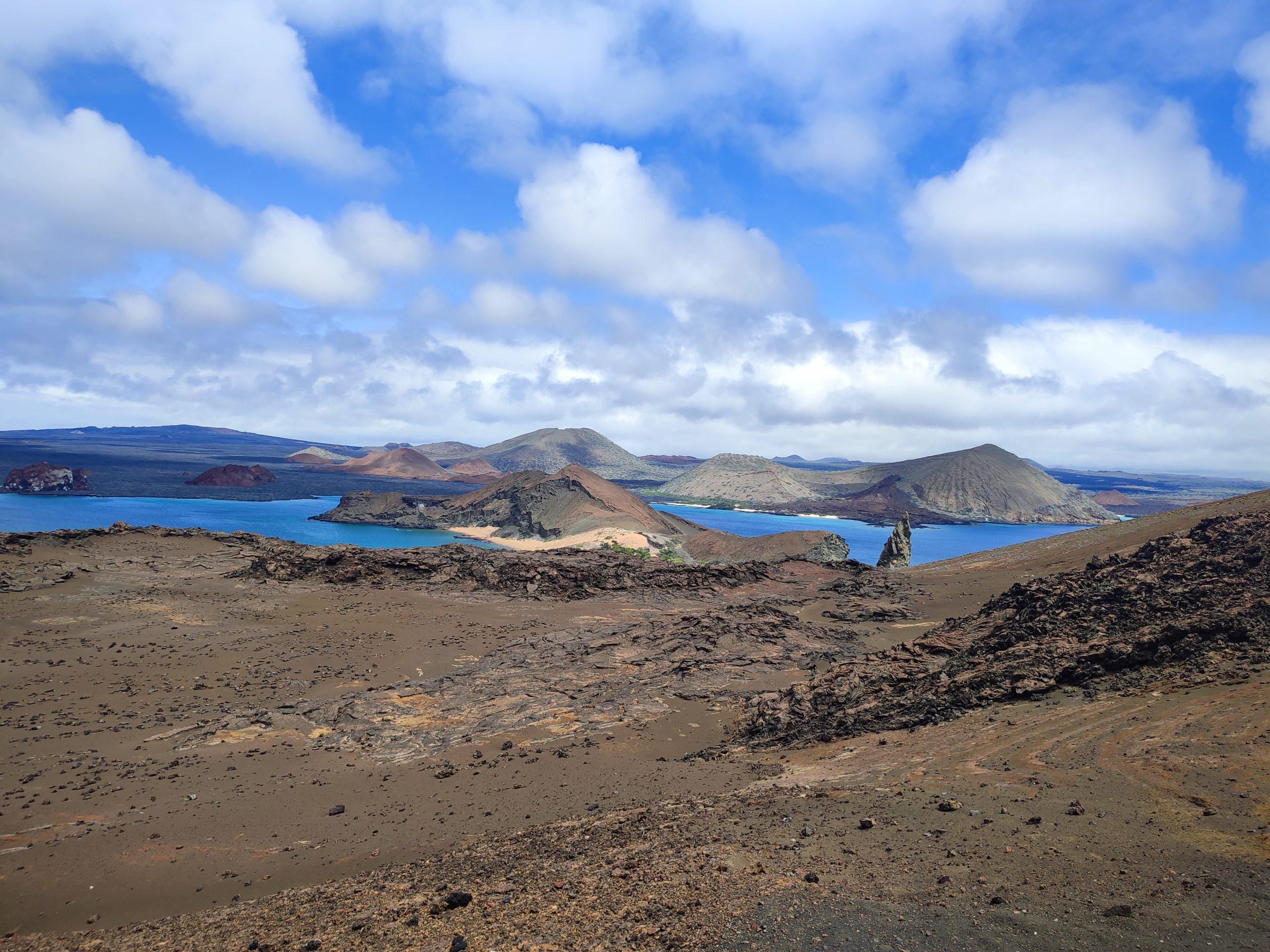
After a dry landing on the concrete pier, we began our climb on a 372-step wooden boardwalk and staircase leading up to Bartolome’s summit.
On a hot day, the ascent can be challenging, so we made sure to carry plenty of water. We took breaks whenever we needed, there’s plenty of space for others to pass, so there’s no rush to reach the top.
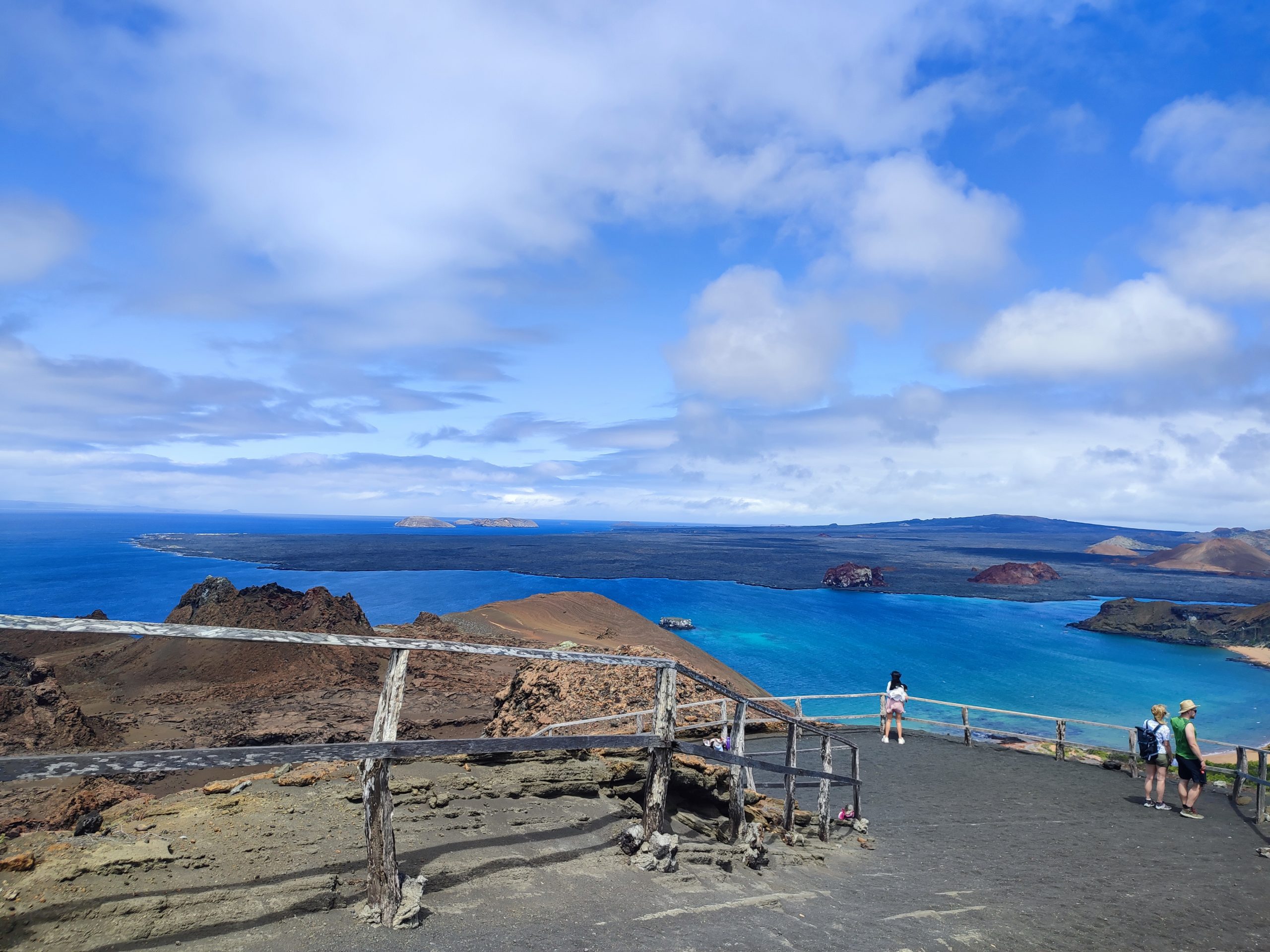
At the summit, we were rewarded with a breathtaking, postcard-worthy view of the Galapagos Islands. Below, we could see Pinnacle Rock and the golden sandy beach, framed by the deep blue waters of the bay.
Behind the bay lay the expansive black lava flows of Santiago Island, with the Daphne Major and Minor islands visible in the distance. Looking down, we also spotted our cruise ship docked in the bay’s brilliant waters.
Along the way, we noticed unique volcanic features like spatter cones and tuff cones, as well as patches of pioneer vegetation, the native Tiquilia nesiotica, Lava cactus, and Scalesia shrubs, all contributing to the stark, almost lunar landscape of ancient lava flows. It felt like stepping onto another planet.
Pinnacle Rock Beach
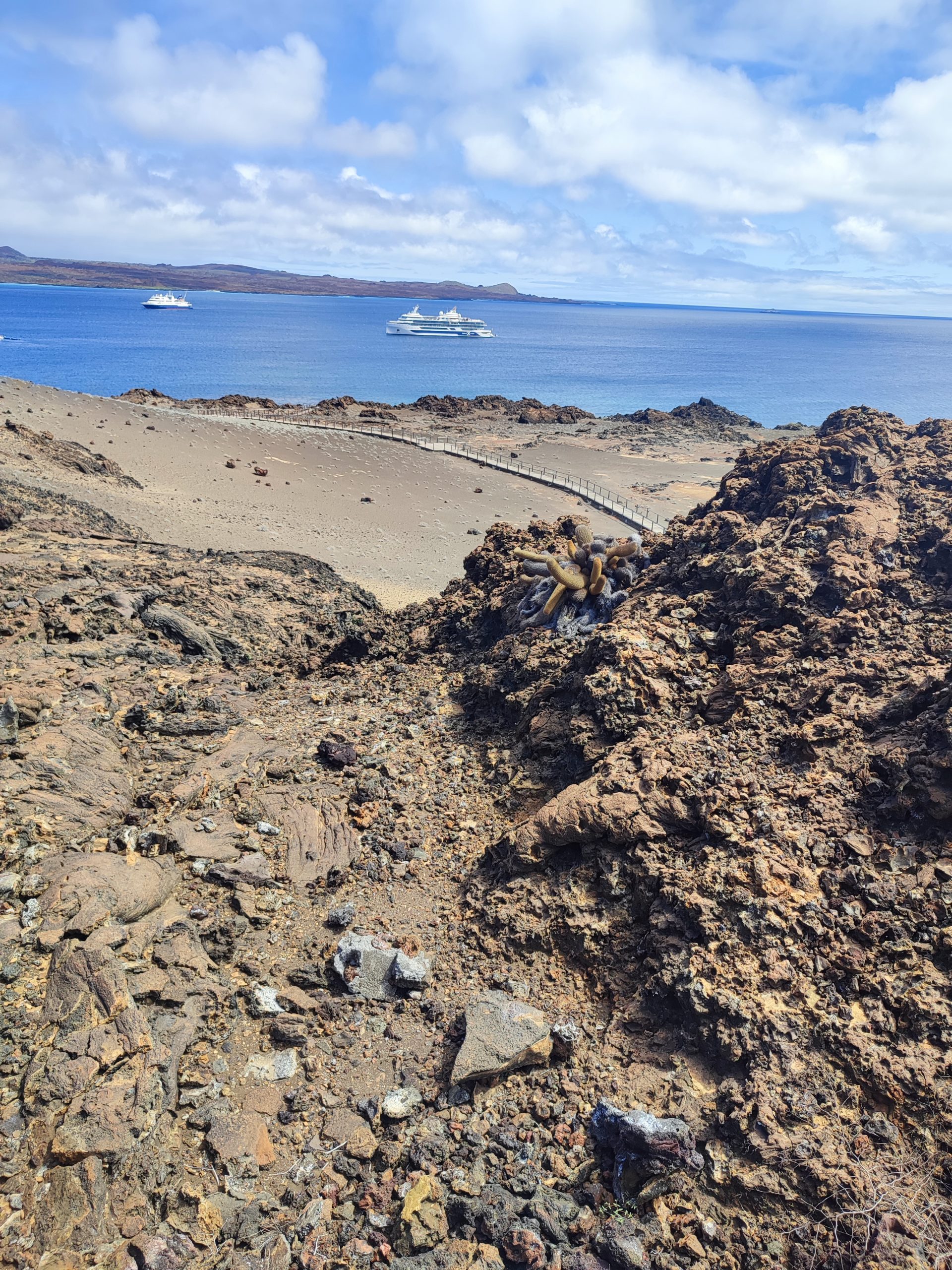
Visitors arrive at a stunning golden sand beach with a wet landing, where we had plenty of time to snorkel, swim, or simply relax in the sun.
For snorkeling, the north beach is the designated entry point, with the main snorkeling area located around Pinnacle Rock. Bartolome Island is renowned as one of the best snorkeling spots in the Galapagos, so we were excited to dive in and explore.
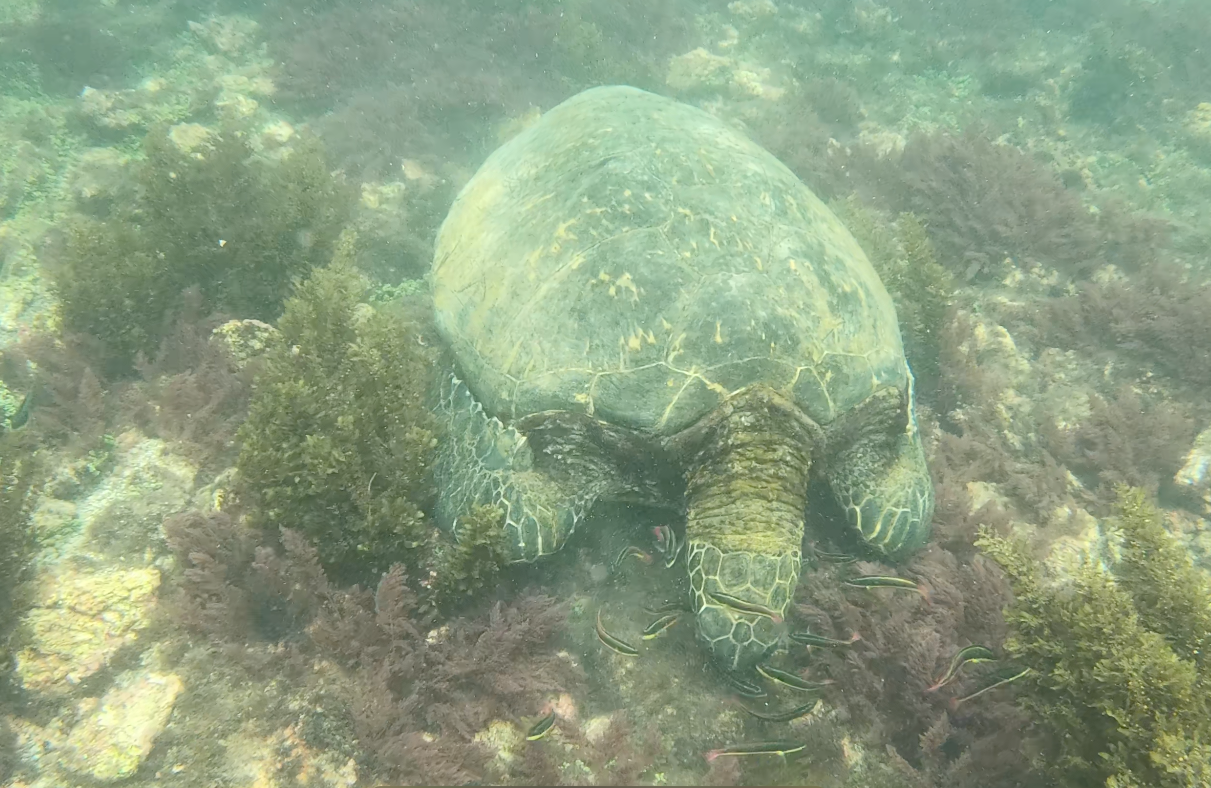
While snorkeling, we encountered some incredible marine life, playful penguins, curious sea lions, reef sharks, rays, and colorful tropical fish. Each sighting made the experience unforgettable, adding a vibrant underwater world to our Bartolome adventure.
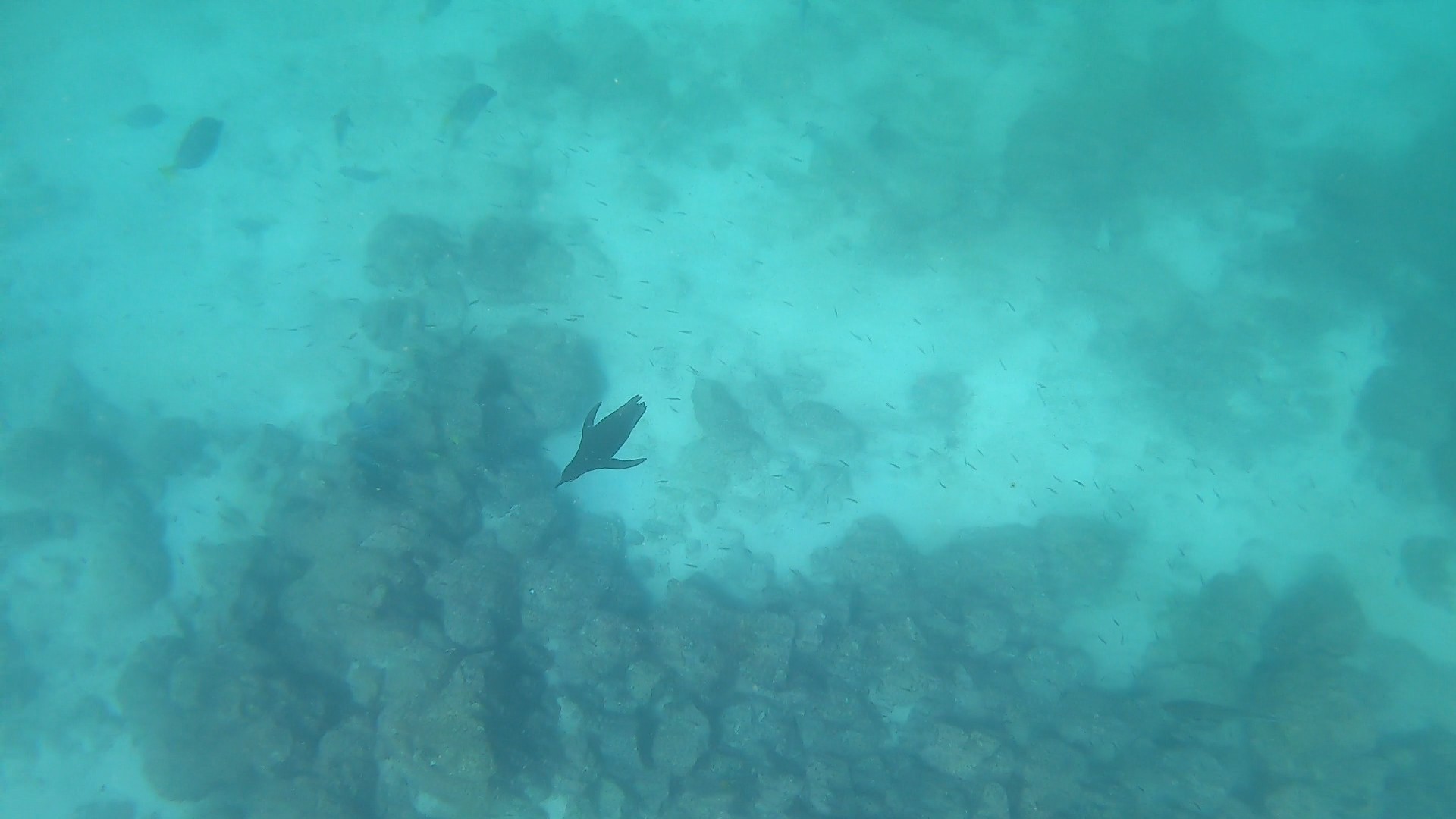
For those on the beach, there’s the option to simply relax and sunbathe or take a refreshing swim. Adventurous visitors can also enjoy a short walk through the mangroves to reach the south shore. From January through March, sea turtles come here to nest, and the shallow waters are a haven for reef sharks and rays.
While swimming isn’t allowed on the north beach, there’s often plenty of wildlife to observe right from the shore, adding a special touch to this unique coastal landscape.
Bartolome Island Dive Site
Due to an upwelling current, the waters around Bartolome are quite chilly. However, these cooler waters are nutrient-rich, making the area a prime feeding ground for Galapagos wildlife.
Blue-footed boobies and other seabirds flock to the region, drawn by the schools of fish. Sharks, sea lions, and Galapagos penguins are also frequent visitors, making it a hotspot for marine activity.
Bartolome’s diving site is set around a rocky platform with underwater cliffs that drop dramatically to the seabed, featuring terraced plateaus. This unique environment supports a wide array of marine life. We were amazed to spot seahorses clinging to black coral “stairs” and reef sharks gathered under the rocky overhangs, a truly fascinating underwater landscape.
How Hard Is The Summit Hike On Bartolomé Island?
The hike is short and well built but unshaded. A wooden boardwalk and staircase of about 372 steps climbs to a viewpoint 114 m above sea level in roughly 20 to 40 minutes. It is rated moderate: the steps are even, there are places to stop and let others pass, and the main challenge is heat and sun, not terrain.
| Detail | Figure |
|---|---|
| Summit height | 114 m (about 374 ft) above sea level |
| Steps | About 372 on the boardwalk and staircase (sources give 360 to 375) |
| Trail length | About 600 m one way, as reported |
| Climbing time | 20 to 40 minutes up, depending on pace and photo stops |
| Difficulty | Moderate: steady climb, no shade, even steps |
| Landing | Dry landing at the pier, then straight onto the trail |
| Group rules | Naturalist guide required; stay on the boardwalk; about 16 people per guide at most |
| Best time | Early morning, before the heat and the afternoon crowds |
Hike figures from the Galapagos National Park-linked sources and operator listings; step counts differ slightly by source.
The boardwalk exists to protect the volcanic ground, which is fragile and easily damaged by footprints. Every visitor goes up the same route, so the busiest moments are mid-morning, when several groups reach the summit at once. Plan your photographs for the moment you arrive, then step back and let others take their turn. Wear shoes with grip because the steps can be dusty, and carry water even on a cool day.
At the top, a platform looks over both beaches and Pinnacle Rock. On a clear day you can also pick out the black lava flows of Santiago and, in the distance, Daphne Major and Daphne Minor. The summit is the reason the island is known for the best panoramic view in the archipelago. If you want more views like it on other islands, our pages on Pinzon Island and Sombrero Chino cover similar tours.
What Can You See While Snorkeling At Bartolomé Island?
The main snorkeling area is around Pinnacle Rock, entered from the north beach by wet landing. The cool, nutrient-rich water attracts Galapagos penguins, sea lions, white-tipped reef sharks, rays, green sea turtles and reef fish. Visibility is usually good in calm conditions. Swimming and snorkeling rules vary by beach, so follow your guide.
| Animal | What to expect | Notes |
|---|---|---|
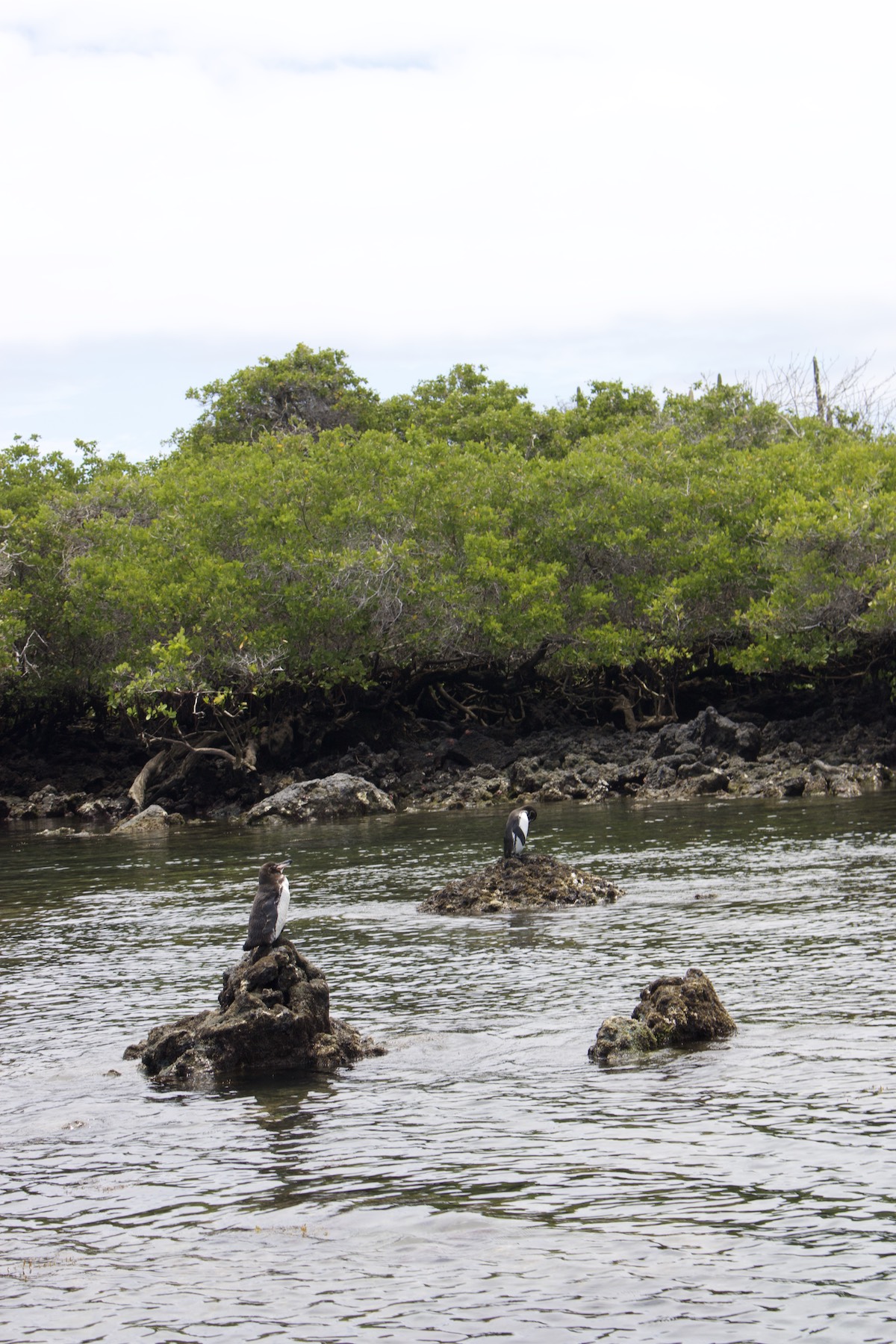
| Galapagos penguin | Small flightless penguin, about 50 cm tall, seen swimming or on rocks near Pinnacle Rock | Endemic and endangered; keep your distance and never chase |
| Sea lion | Playful, often passes close | Keep 2 m away; do not touch |
| White-tipped reef shark | Resting under ledges and rocky overhangs | Small and shy; one of the most reliable sightings |
| Green sea turtle | Seen swimming in the shallows; nesting on the beach roughly January to March | Do not disturb nesting areas |
| Rays | Spotted eagle rays and stingrays near sandy patches | Shuffle your feet when wading |
| Reef fish | Schools of colourful tropical fish | Plentiful around the rocky platform |
Species lists come from park-linked and operator sources; sightings on any single day are not guaranteed.
The water here is colder than on many other beaches because upwelling currents bring up nutrients from below, and that is exactly why the animals gather. Wear a wetsuit in the cooler months unless you feel the cold easily. The Galapagos penguin is the highlight: it is the only penguin that lives in the tropics, and a few live around Pinnacle Rock year-round. The 2 metre wildlife distance rule applies in the water too, so let animals come to you.
Beyond snorkeling, a dive site circles much of the island, with penguins, turtles, sharks and rays, and divers can see the underwater cliffs we described above. If you are comparing sites, Bartolomé is ranked among the best for snorkeling in the central islands, but it is not the only option; our things to do in the Galapagos page lists more.
What Else Is Near Bartolomé Island: Sullivan Bay And Sombrero Chino?
Sullivan Bay on Santiago Island sits right across the water and is known for its young pahoehoe lava flows from the 1897 eruption. Sombrero Chino is a small cone-shaped islet to the south, with a short trail and a reef. Many day tours and cruises combine Bartolomé with one or both of them.
| Site | What it is | Time and trail | Link |
|---|---|---|---|
| Bartolomé Island | Summit view, Pinnacle Rock, snorkeling | Half a day with the climb and swim | This page |
| Sullivan Bay (Santiago) | Pahoehoe lava flows, hornitos, tree molds, pioneer plants | About 1.5 km walk, roughly 1 to 1.5 hours | See the map above |
| Sombrero Chino | Small cone islet with a short trail and snorkeling | Short visit, often combined with Bartolomé | Sombrero Chino tour |
| North Seymour | Birds and sea lions on a flat uplifted island | Separate half-day visit | North Seymour tour |
| Pinzón Island | Offshore snorkeling and wildlife | Separate tour | Pinzon Island tour |
Trail details for Sullivan Bay are from operator and travel sources; distances are approximate.
The Sullivan Bay trail crosses lava that is geologically young: the flow is dated to the 1897 eruption and shows ropy pahoehoe patterns, collapsed tubes and small conical features called hornitos. It is hot, black and open to the sun, a short but striking contrast to the beaches at Bartolomé. Combining the two on the same tour makes sense because the boat has already crossed the bay.
Sombrero Chino, named for its likeness to a Chinese hat, completes the usual trio. We cover it on its own page because it is a destination in its own right with penguins, sea lions and a short trail on a tiny island.
When Is The Best Time To Visit Bartolomé Island?
The best time of day is early morning, when the hike is cool and the light is soft. The island can be visited all year, but the cooler months from about June to December bring colder, more nutrient-rich water and more marine life, while January to March is turtle nesting season on the north beach.
| Period | Conditions | What it means for your visit |
|---|---|---|
| Early morning | Cooler, fewer groups on the stairs, soft light | Best hiking and the best photographs |
| Midday and afternoon | Hot, bright and busier | Plan swimming instead of climbing |
| December to May | Warmer, calmer water, occasional showers | Easier snorkeling; turtle nesting from about January to March |
| June to December | Cooler, drier, breezier; colder upwelling water | Wetsuit recommended; penguins and sharks well seen |
Seasonal windows are from operator and park-linked sources; check conditions with your operator.
If you can choose between a morning and an afternoon departure, choose the morning. The stairs are exposed and the afternoon sun is punishing. Some cruises time their visit for sunrise, which is rewarding but depends on the itinerary. For a month-by-month view of the weather, see our best time to visit the Galapagos guide.
What Mistakes Do Visitors Make At Bartolomé Island?
The most common mistakes are leaving booking until you are on the islands, starting the hike late, bringing too little water and sun protection, skipping the wet shoes and snorkel gear and treating the guide rules as optional. All of them are cheap to avoid.
- Waiting to book until you arrive. The park limits visitors and Bartolomé sells out early; trying to find a place for a day tour on arrival can leave you with nothing.
- Missing the morning. The stairs have no shade. A late start means a hotter climb and busier platforms.
- Underestimating the sun and heat. Bring a hat, reef-safe sunscreen and plenty of water, even if you feel fine at the pier.
- Wearing the wrong shoes. Dry landing at the pier and a wet landing at the beach need two different kinds of footwear; sandals that stay on in water work best.
- Going without snorkel gear or a wetsuit. The water is cooler than at many beaches, and the snorkeling is the main reason to visit.
- Straying from the boardwalk or approaching animals. The ground is fragile, the minimum distance is 2 m, and your guide is required to enforce it.
- Treating it as a one-stop island. Bartolomé is best as part of a day with Sullivan Bay or Sombrero Chino.
Most of these problems come from treating Bartolomé as an easy add-on rather than a managed national park site with limits. Book early, go in the morning, carry water and follow your guide, and the day takes care of itself.
Is Bartolomé Island Worth Visiting?
We highly recommend including Bartolomé Island in a Galapagos itinerary. The island may not have as much land-based wildlife, but its marine life makes up for it, and the 360-degree view from the summit is a highlight. The Galapagos National Park allows a limited number of visitors each day, so book your tour online early.
Bartolome is one of the most popular islands for tourists in the Galapagos, and it’s easy to see why. While the island may not have as much land-based wildlife, its incredible marine life more than makes up for it. Plus, the 360-degree view from the summit is truly the best panoramic viewpoint in the entire archipelago.
We highly recommend including Bartolome Island in your Galapagos itinerary, it’s a highlight of any adventure here, offering unforgettable sights both above and below the water.
If you’re planning to visit Bartolome Island, remember to book your tour ahead of time! The Galapagos National Park only allows a limited visitors each day, so getting a tour can be tough once you’re on the islands, especially if you’re staying for less than a week. We really suggest booking your tour online early so you’re sure to get a spot. You won’t want to miss out on seeing Bartolome when you visit the Galapagos!
For most visitors Bartolomé is one of the highest-value stops in the central Galapagos. It combines a short, rewarding hike, a famous landmark and snorkeling in a single outing, and the logistics are simpler than for remote islands because it is reachable from Santa Cruz. If you are on a tight budget, a day tour costs less than a multi-night cruise, though the island is only part of the day.
It is less ideal if you want to see lots of land wildlife, because the ground is mostly bare lava. If animals on land are your priority, add North Seymour or a visit to the tortoise areas on Santa Cruz. For help fitting Bartolomé into a route and a budget, start with our Galapagos travel guide and the 10-day budget plan.
Planning trip to Galapagos Islands?
My wife and I spent two weeks on these magnificent islands, visited nearly every possible tour, and explored as much as we could. I shared all the important details in my full Galapagos Islands Travel Guide, where I cover everything you need to know about planning a trip to the Galapagos.
Galapagos Islands travel might surprise you with extra fees to enter the islands, the complicated logistics between islands, booking tours, and knowing which spots are free to explore and which ones are not. I’ve covered it all in this Galapagos Travel Guide.
Also, if you’re planning a trip to the Galapagos, make sure to use my link for discounted hotel prices via Booking.com. It really helps support my blog!
Questions About Bartolomé Island
Can I take a day trip to Bartolome Island?
Yes. Day tours run from Puerto Ayora on Santa Cruz Island to Bartolome. In 2026 they cost roughly USD 245 to 495 per person. Visitor numbers are limited and tours sell out early, so booking ahead is recommended.
How much does a Galapagos island trip cost?
A Bartolomé day tour from Santa Cruz costs roughly USD 245 to 495 per person in 2026 (GetYourGuide 495, Viator 384). Tours bought on the islands can be 20 to 40 percent cheaper than online, but Bartolomé sells out early, so book it ahead.
What is a must see in the Galapagos Islands?
Bartolome Island is a must-see. The 360-degree view from the summit is considered the best panoramic viewpoint in the archipelago, and the marine life, including snorkeling with penguins and sea lions, makes up for fewer land animals.
What is Pinnacle Rock?
Pinnacle Rock is the pointed rock beside the Bartolomé beaches and the most photographed landmark in the Galapagos. It is the eroded remnant of a tuff cone, a volcano formed when magma met seawater.
How many steps are there to the top of Bartolomé?
About 372 on the wooden boardwalk and staircase, although sources quote 360 to 375. The summit is 114 m above sea level and the climb takes about 20 to 40 minutes.
Can you snorkel with penguins at Bartolomé?
Yes, the waters around Pinnacle Rock are one of the best places in the Galapagos to see Galapagos penguins, along with sea lions, reef sharks and turtles. Sightings are never guaranteed, and a 2 m distance applies.