Ruta de las Cascadas (Waterfall Route) in Baños: Our Experience
Quick Facts About The Ruta De Las Cascadas
| What it is | The waterfall road east of Baños along the Pastaza River toward Puyo, mostly downhill |
|---|---|
| Pailón del Diablo | About 18 km from Baños; day entry USD 3 for adults, USD 2 for children |
| Cascada Rocío Machay | About 15 minutes past Pailón del Diablo; entry USD 1.50 to 2 per person, swimming possible |
| Bike rental | About USD 5 to 10 per day in Baños |
| Time needed | A full day if you cycle it and stop at the falls |
Our Take On The Ruta De Las Cascadas
We biked the Ruta de las Cascadas east of Baños along the Pastaza River, and the first stop, Pailón del Diablo, left us in awe as the water cascaded down. The route mostly descends from Baños, which made it accessible for my wife and me. We recommend dedicating an entire day to it. It was a perfect blend of nature, adventure, and culture.
Baños is a picturesque town that captivated my wife and me with its stunning natural beauty. Nestled in the Andes Mountains, it’s known as the “Gateway to the Amazon,” making it the perfect starting point for exploring the Baños Waterfall Route, or Ruta de las Cascadas.
We were excited to bike along this trail as a part of this tour, which showcases incredible waterfalls and breathtaking landscapes. The first stop was the magnificent Pailón del Diablo, where the powerful water cascading down left us in awe. The refreshing mist on our faces was invigorating as we took photos to capture the moment.
Along the route, we enjoyed fresh fruit from local vendors, which was a delightful treat. Interacting with the locals added a special touch to our adventure, as they shared stories about the area.
The experience along the Baños Waterfall Route was a perfect blend of nature, adventure, and culture. We left feeling grateful for our time in Baños and eager to return to explore more of its treasures.
Some parts of this route I shared in the video on my travel channel:
What Is The Ruta De Las Cascadas In Baños?
The Ruta de las Cascadas is the waterfall road east of Baños along the Pastaza River and its tributaries, heading toward Puyo. The route is dotted with waterfalls, ziplines, cable cars, swings and a bungee jump. It primarily descends from Baños, so cyclists of all fitness levels can ride the first half, about 18 km to Pailón del Diablo.
The Baños waterfalls are located east of Baños along the scenic Pastaza River and its tributaries, forming the unmistakable Ruta de las Cascadas. This 25km cycling route stretches from Baños to Puyo and is dotted with numerous waterfalls, ziplines, cable cars, swings, and even a bungee jump.
While the official route spans 61km, realistically, we found that the first half is most manageable for a day of cycling. One of the best aspects of this route is that it primarily descends from Baños, making it accessible for cyclists of all fitness levels, including my wife and me. We enjoyed the thrill of descending while taking in the breathtaking views of the waterfalls along the way.
Can You Rent A Bike For The Ruta De Las Cascadas In Baños?
Bike rental in Baños costs about USD 5 to 10 per day, with prices often posted on shop doors. Our shop asked for identification because of past bike thefts, and provided a lock, a tire patch kit and a pump. Check the brakes and helmets before setting out. A shuttle back to Baños needs no advance reservation.
| Item | Cost |
|---|---|
| Bike rental in Baños, per day | USD 5 to 10 |
| Pailón del Diablo, day entry | USD 3 adults, USD 2 children |
| Cascada Rocío Machay entry | USD 1.50 to 2 per person |
Bike prices vary by shop and bike; the entry fees are the current published ones.
We made our way to the main road in the center of Baños, where numerous shops offered bike rentals. It was easy to find a place, as the rental prices were often posted right on the door. We found it helpful to choose a shop with clear pricing, ensuring there were no surprises. After some browsing, we just decided to take this tour to have fun with other travellers!
Before heading out, we made sure to get helmets and thoroughly check our bikes. Good brakes were essential for the ride, especially with the descent ahead. We appreciated that we could catch a shuttle back to Baños from either Paílón del Diablo or Cascada Rocío Machay at the end of the day, and we were relieved to find out we didn’t need to reserve it in advance.
After choosing our bikes, the shop asked us for a form of identification. This was a common practice among rental shops in Baños, as many had faced bike thefts in the past, and they wanted to ensure security.
The shop equipped us with a lock, a tire patch kit, and a compact handheld pump, all neatly packed in a drawstring bag that doubled as a backpack.
Before we left, we also asked for a paper map of the route. Even though the path is straightforward, having a map was a good idea to keep us oriented and informed along the way.
How Much Time Do You Need For The Ruta De Las Cascadas?
A full day is needed if you cycle the route. We started around 9 am and returned around 6 pm. The beginning is tricky, running along a busy highway, but the rest becomes easier. Most people cycle the 18 km to Pailón del Diablo, and you can continue to Cascada Rocío Machay.
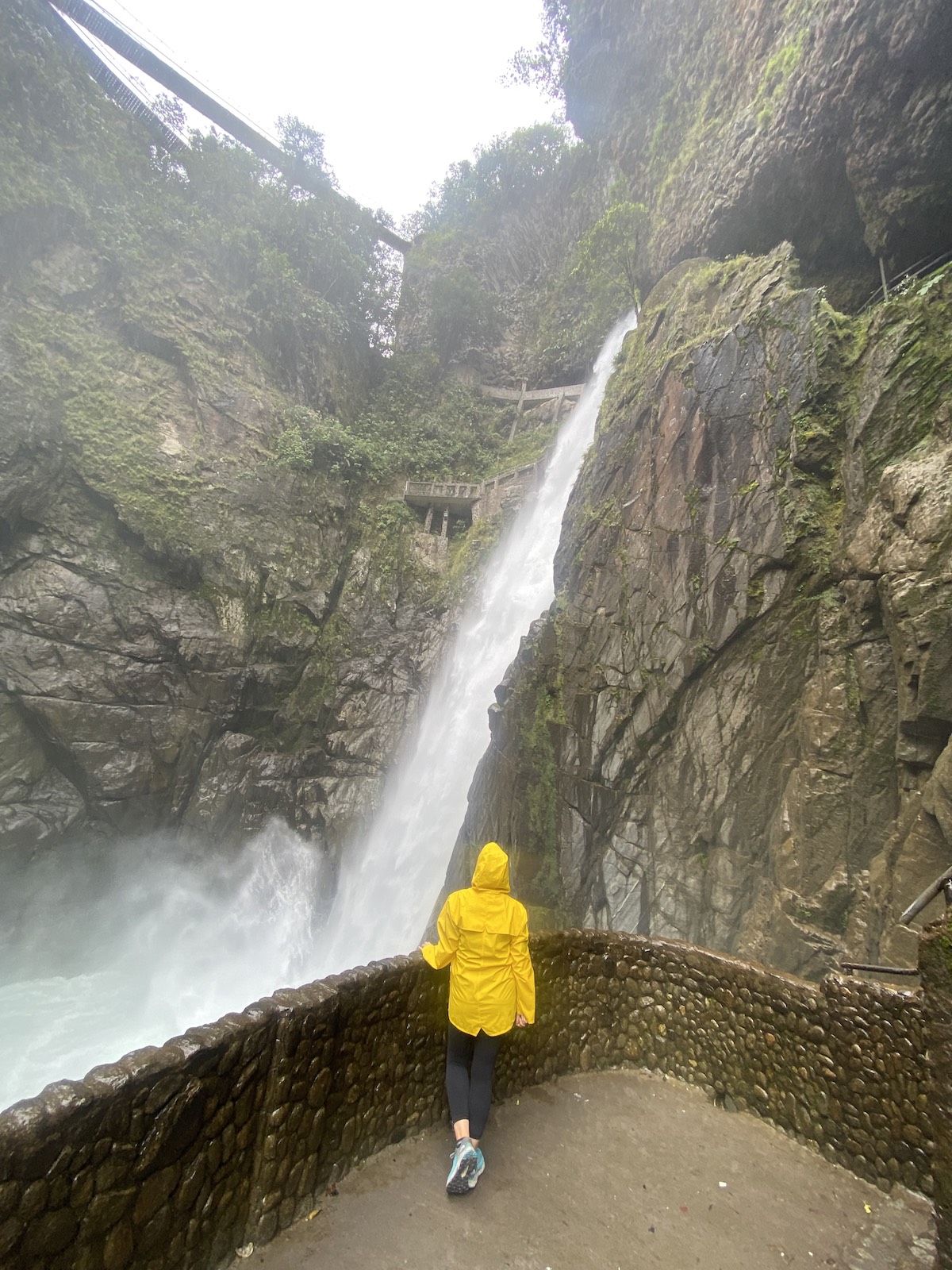
The Waterfall Route from Baños is an incredible adventure that I highly recommend dedicating an entire day to explore fully. Starting early in the morning gives you ample time to visit each waterfall, engage in thrilling activities, and soak in the awe-inspiring scenery without feeling rushed.
We kicked off our journey around 9 am and returned around 6 pm, making it a truly fulfilling day. I definitely wouldn’t have wanted any less time to appreciate all that the route offers!
As we set off, we left the town center and headed east on the main road. The beginning was a bit tricky since we biked on a busy highway. Navigating that stretch was challenging, but the rest of the route became much easier.
While most people cycle the 18 km from Baños to the impressive Paílón del Diablo, we suggest considering the option of continuing on to Cascada Rocío Machay, time permitting. This spot offers the perfect opportunity for a refreshing swim, which is not only luxurious but also necessary after a 20 km bike ride in the humid conditions.
Which Waterfalls Are On The Ruta De Las Cascadas?
The route has six main waterfalls across five sites. Closest to Baños are Cascadas Ulba and Silencio, located near each other. Further on, Cascada Agoyan and Cascada Manto de la Novia are visible from the road. The route leads to the Pailón del Diablo Waterfall and Cascada El Rocío Machay, where swimming is possible along the way.
| Waterfall | What to know |
|---|---|
| Cascada Ulba | 10 minute walk from Ulba village via Calle Juan Montalvo, path can be muddy |
| Cascada Silencio | Reach by following the smaller river upstream from Cascada Ulba, tricky in heavy rain |
| Cascada Agoyan | Twin waterfall on the Pastaza River, visible from the road, cable car and zipline rides |
| Manto de la Novia | 40 meter veil like falls, 10 minute walk via suspension bridge, small cable car over falls |
| Pailon del Diablo | Two separate entrances in Rio Verde, one with stairs platform, one path behind the falls |
| Cascada Rocío Machay | 15 minute stroll along wooden stairs and swing bridges, swimming allowed in safer pools |
The waterfalls route boasts six main waterfalls spread across five sites.
Starting with the closest to Baños, you’ll find Cascadas Ulba and Silencio, which are conveniently located near each other. As you continue, you’ll come across Cascada Agoyan and Cascada Manto de la Novia, both easily visible from the road.
The journey ultimately leads to the renowned Pailón del Diablo Waterfall, along with the awe-inspiring Cascada El Rocío Machay, which is the perfect spot for a refreshing swim along the way.
What Can You Do At Cascada Agoyan On The Ruta De Las Cascadas?
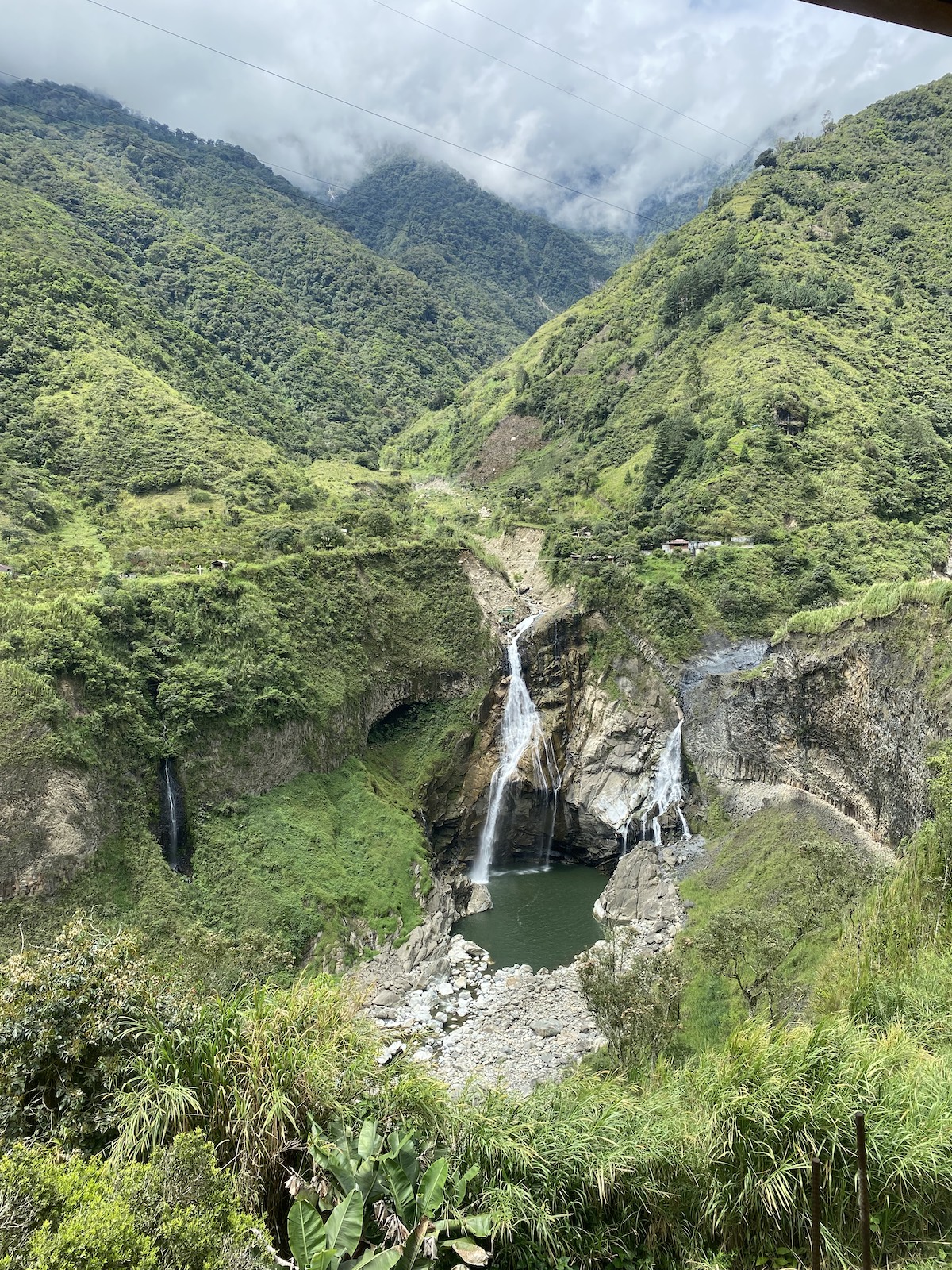
Cascada Agoyan is a twin waterfall on the Pastaza River, easily seen from the road. The true highlight for us was the cable car ride above the cascades, and we then tried the zipline, choosing the Superman-style ride face down over the waterfalls.
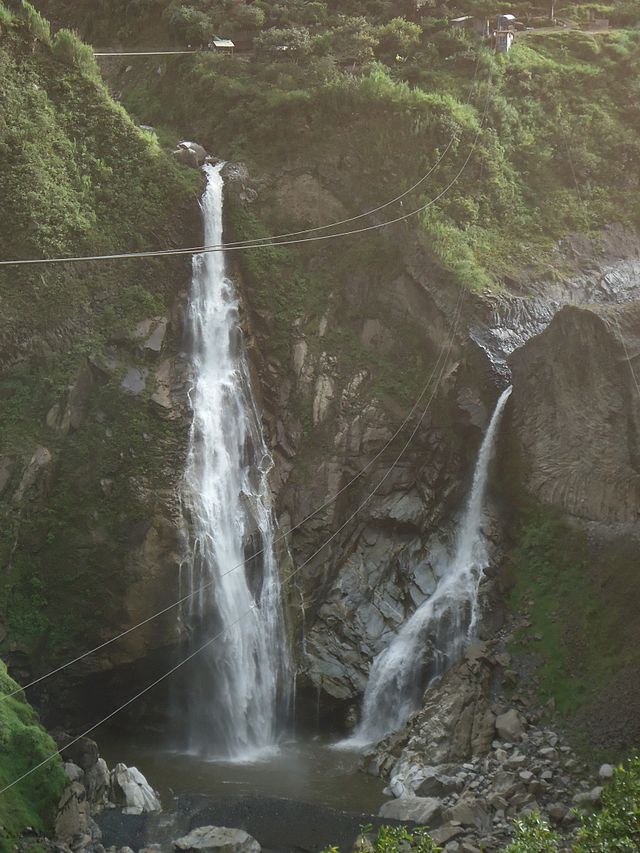
Situated directly on the Pastaza River, we were completely captivated by the breathtaking beauty of this exquisite twin waterfall. But the true highlight for us was the exhilarating cable car ride that took us soaring above the cascades.
The adrenaline rush of the zipline adventure was something we had to try. I’ll never forget the feeling of flying over the waterfalls—my wife and I chose to ride Superman-style, face down, and it was absolutely thrilling! The views were stunning, and that moment made our trip unforgettable. It’s experiences like this that truly make the Baños Waterfall Route special!
How Do You Visit Manto De La Novia On The Ruta De Las Cascadas?
Manto de la Novia, the Bride's Veil Waterfall, is 40 meters tall and flows like a veil down the rocks. You can park bikes by the roadside and walk about 10 minutes down via a suspension bridge. A small cable car passes over the falls, but you still need to walk down to appreciate the waterfall fully.
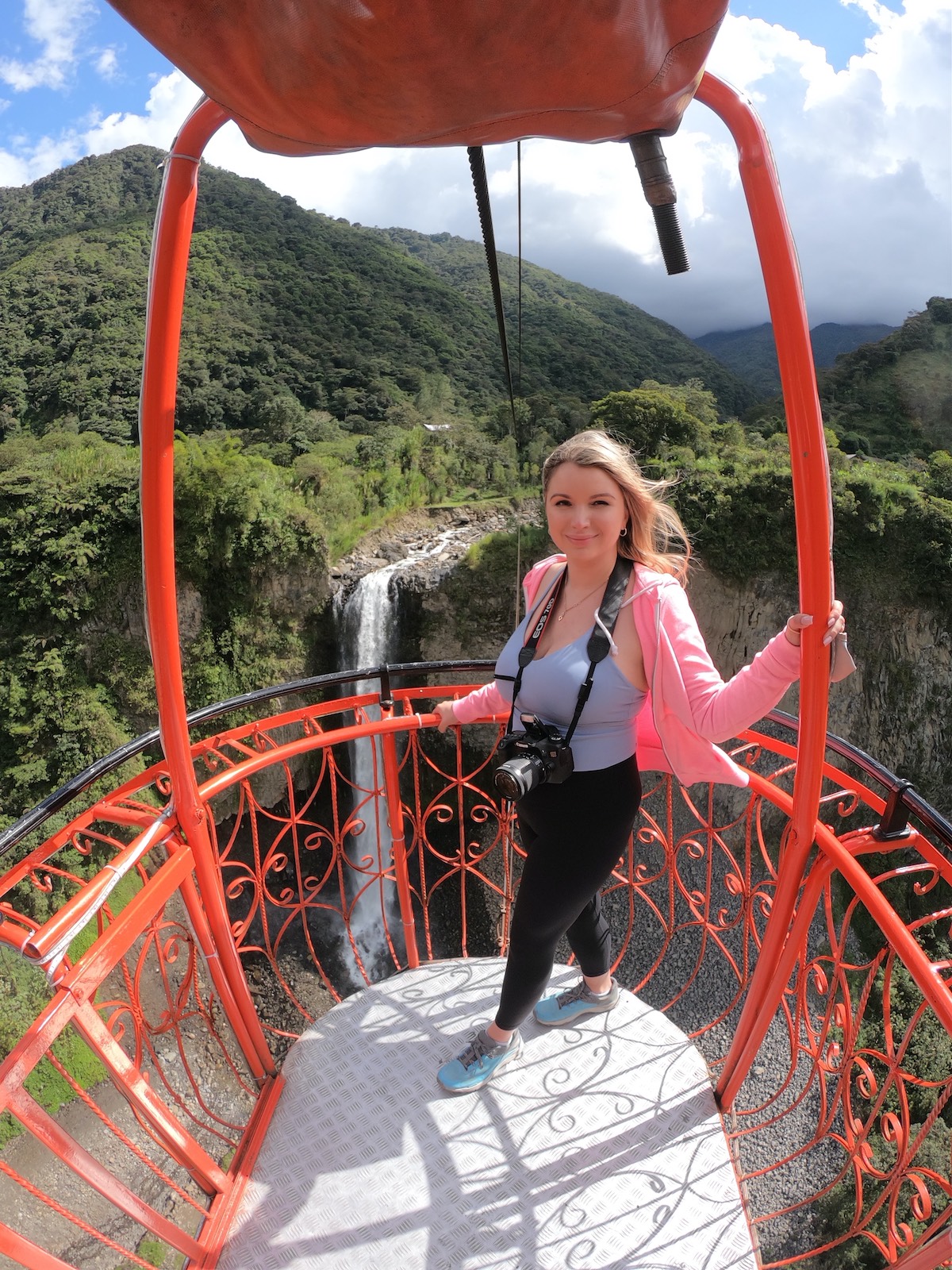
This 40-meter-tall, veil-like waterfall, known as Cascada Manto de la Novia, truly took our breath away. The name translates to “Bride’s Veil Waterfall,” perfectly capturing how the water flows like a delicate veil cascading down the rocks.
We parked our bikes by the roadside and decided to take the 10-minute walk down to the waterfall via the suspension bridge. It was a lovely stroll, and as we approached, the sound of rushing water grew louder, heightening our excitement. You can also opt for the small cable car that passes over the falls, but keep in mind that you’ll still need to walk down to fully appreciate its beauty.
Reaching the waterfall was a magical moment for us, as the views were stunning from every angle. It was an experience we would highly recommend to anyone on the Baños Waterfall Route!
Is There A Devil's Cauldron Waterfall In Ecuador?
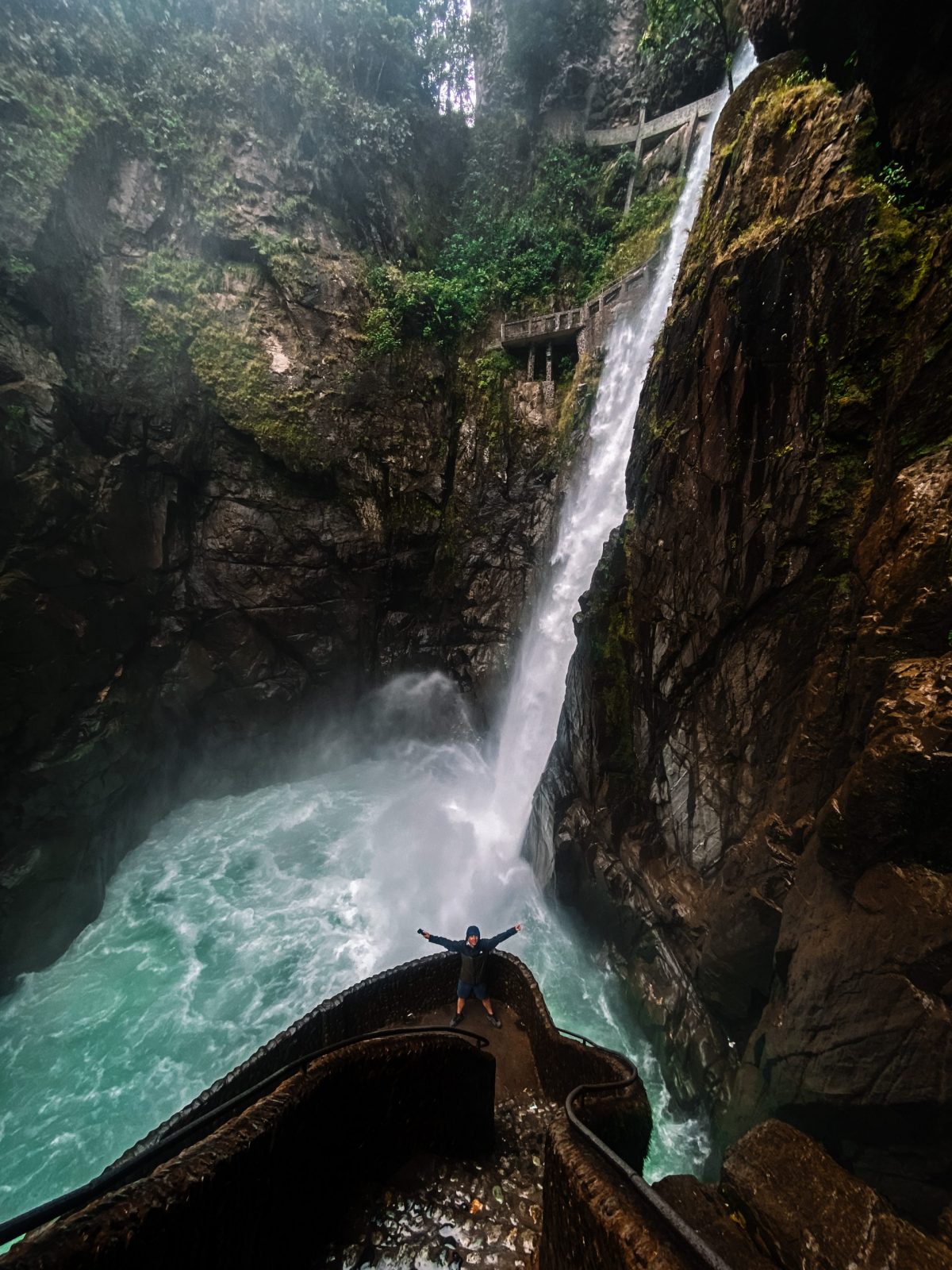
The Pailón del Diablo, or Devil's Cauldron, lies near Rio Verde, 18 km from Baños. Entry costs USD 3 for adults and USD 2 for children. Two separate entrances have non intersecting paths: the New Entrance leads to a higher platform, while the original, across the yellow-sided bridge, lets you walk behind the waterfall.
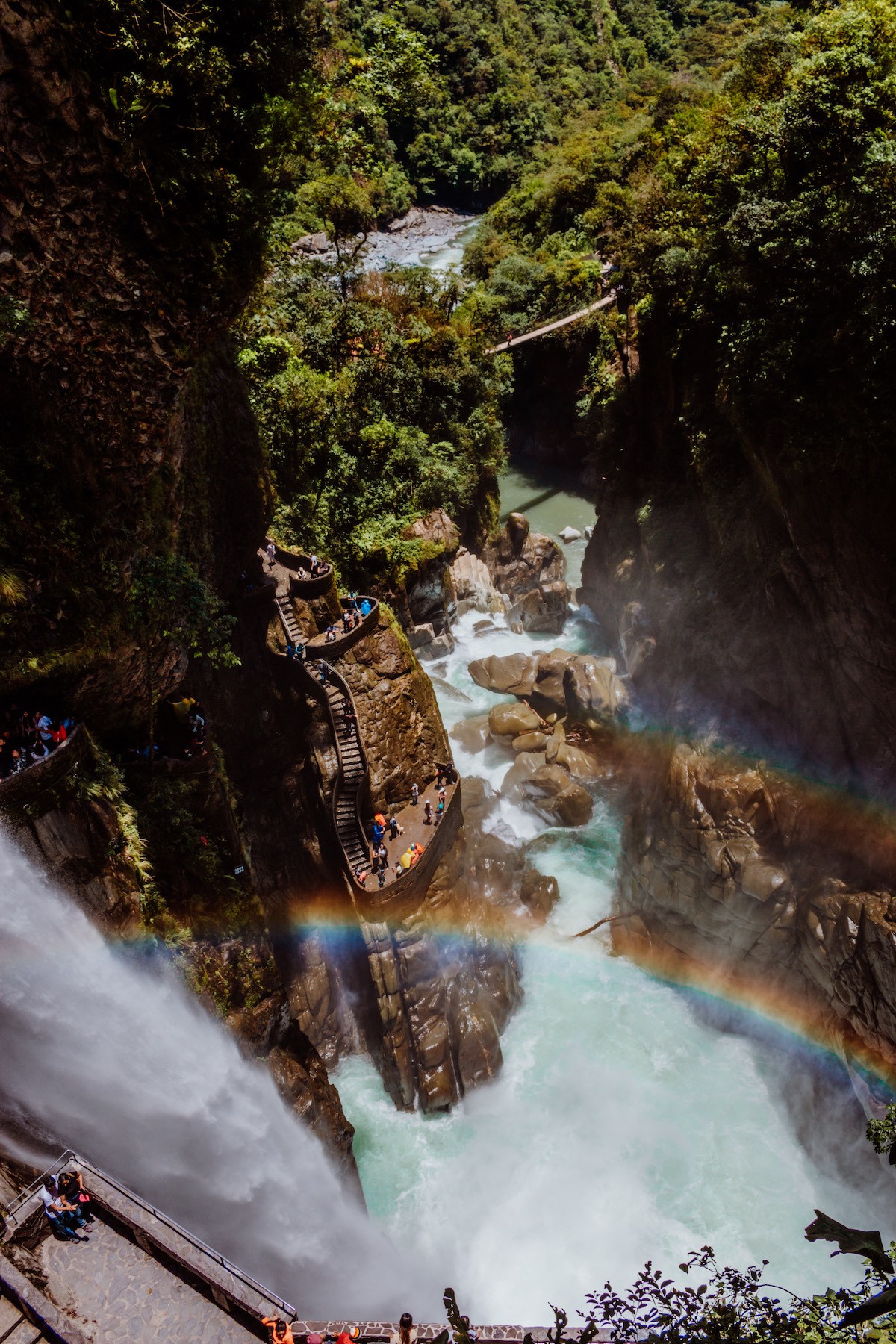
The Pailón del Diablo Waterfall, located in the charming town of Rio Verde, is an absolute highlight of the Baños Waterfall Route. The town is bustling with restaurants, cafes, and shops, making it a perfect spot to relax after a day of exploring.
What’s unique about Pailón del Diablo is that it has two separate entrances, each offering a different experience. We discovered that the paths from each entrance do not intersect, so once you’re in one area, you can’t cross over to the other.
When we arrived, we chose the first entrance, known as the New Entrance, which is conveniently located just before the yellow-sided bridge. This entrance led us to the higher viewing platform with the iconic stairs, perfect for capturing those stunning photos we had seen online. Following the path along the small river was a pleasant walk, and soon we found ourselves at the ticket office, eager to see the falls up close.
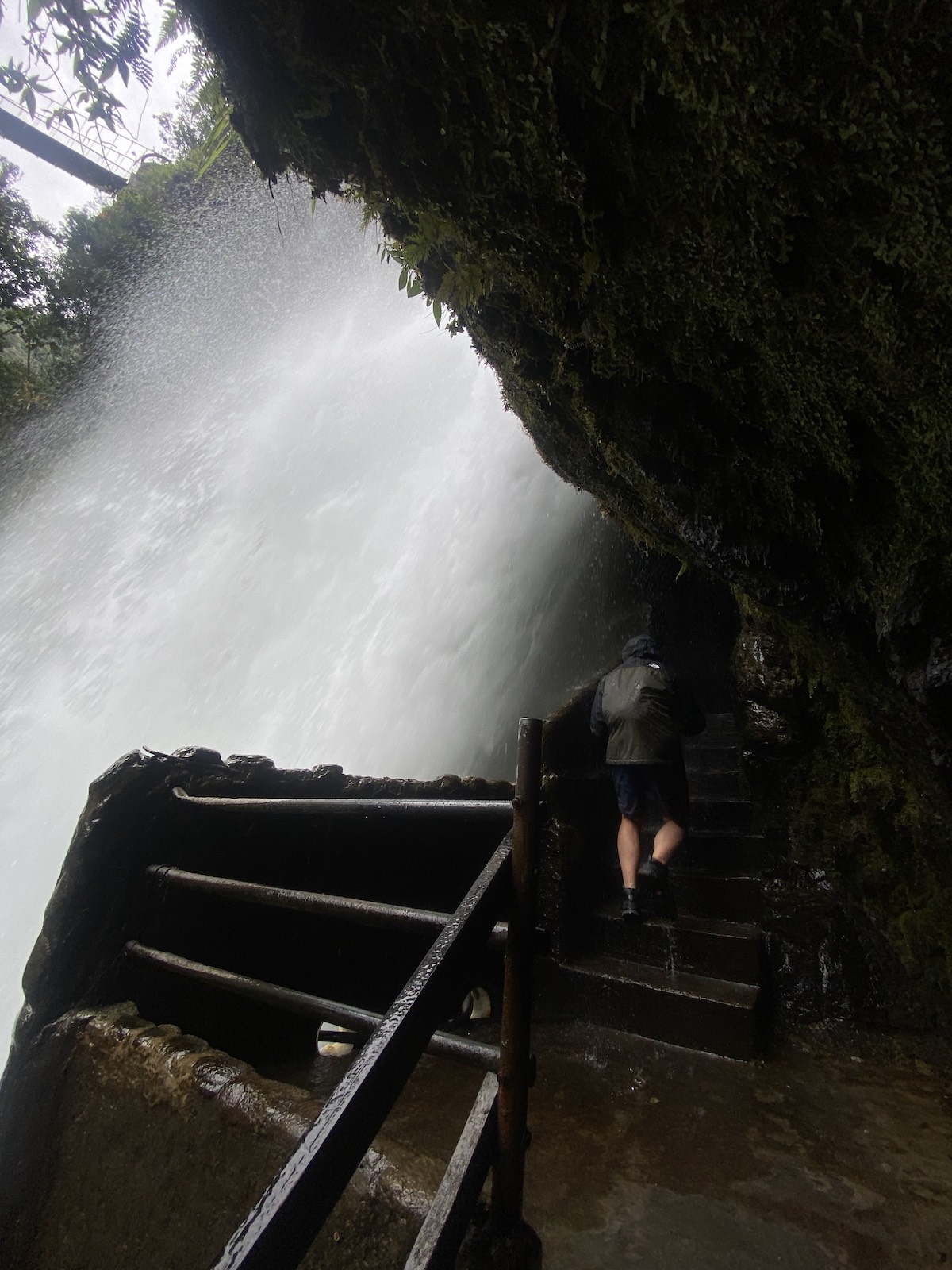
If you’re looking to experience the thrill of walking behind the waterfall, you’ll want to head to the second entrance, known as the original entrance. We discovered this entrance located across the yellow-sided bridge on the right-hand side of town.
Once we crossed the bridge, we were greeted by the sounds of rushing water, and our excitement grew. This path takes you closer to the waterfall, where you can truly appreciate its power and beauty from a unique vantage point. The experience of standing behind the cascading water is unforgettable, and it allows you to feel the cool mist on your face as you take in the stunning views.
Can You Swim At Cascada Rocío Machay?
Rocío Machay, 15 minutes past Pailón del Diablo, is one of the few swimming spots on the route. Entry costs USD 1.50 to 2 per person. From the bike rack, a 15-minute walk along wooden stairs and swing bridges leads down to the falls. Safer pools sit toward the river, away from the stronger current.
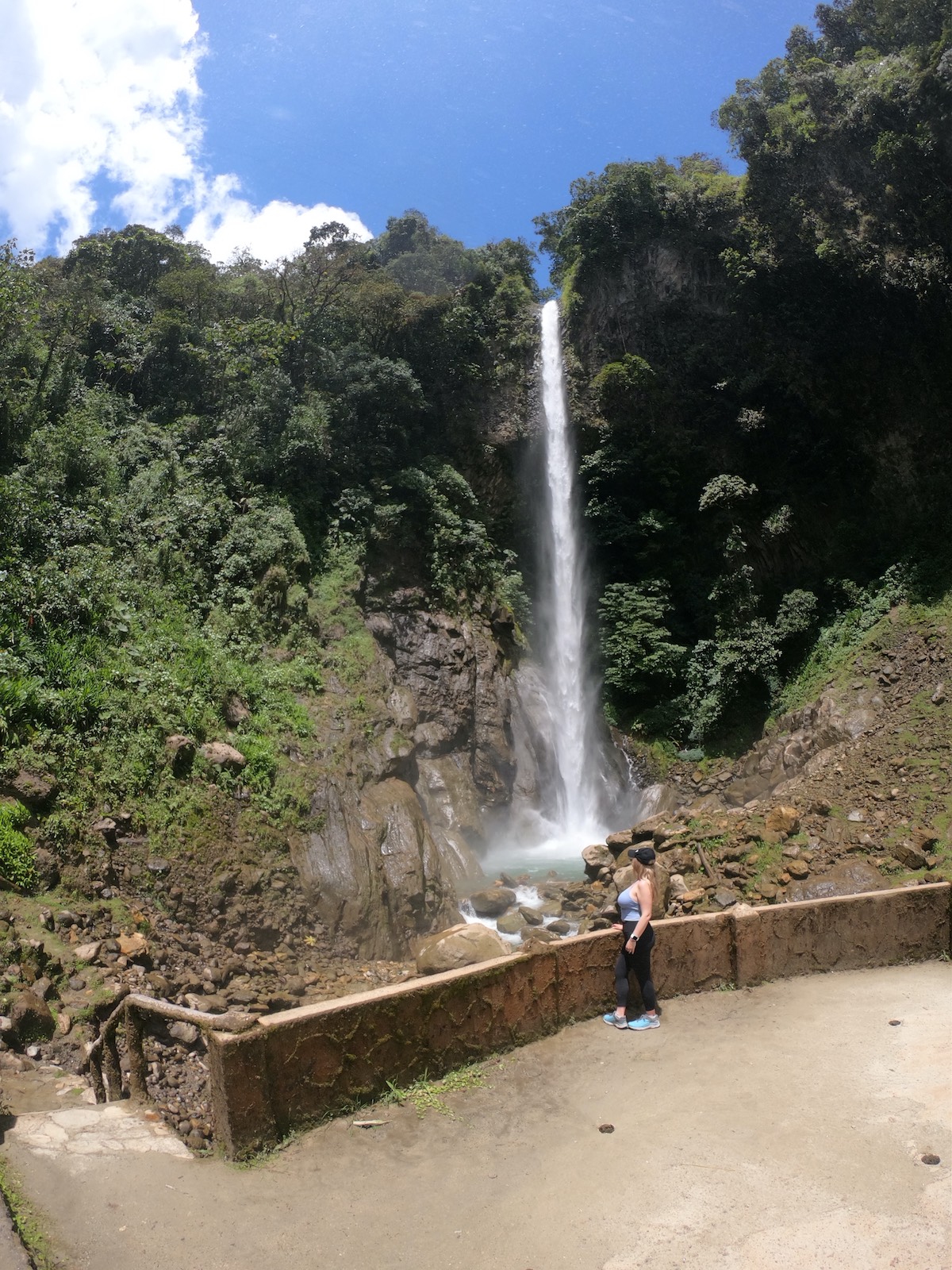
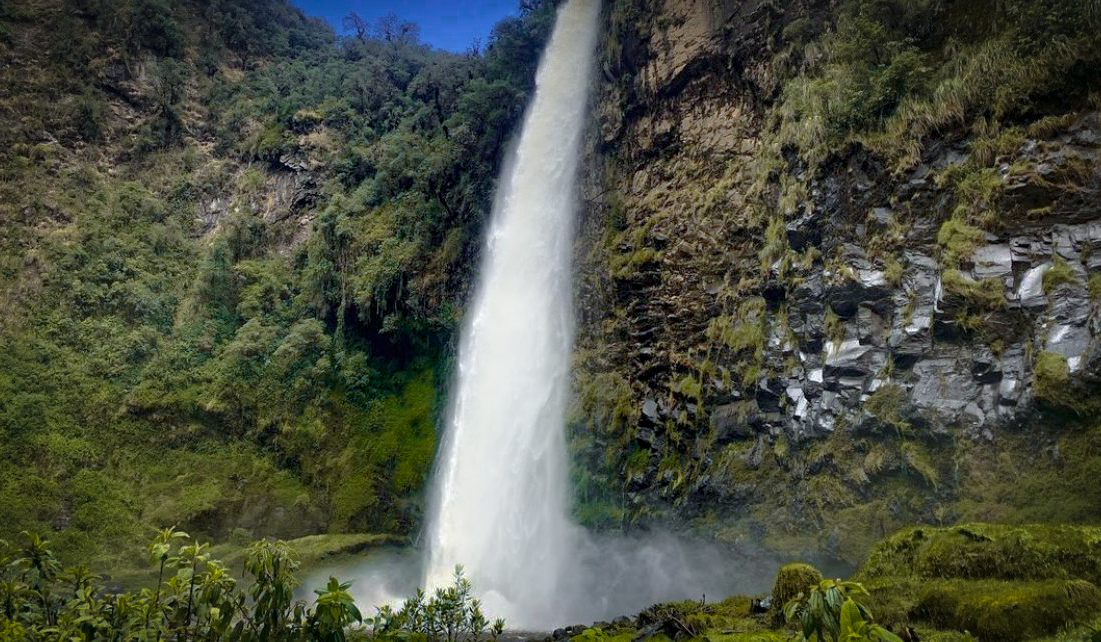
While most visitors wrap up their day at El Pailón del Diablo, we decided to take a short 15-minute drive down the road to Cascada Rocío Machay (also known as Cascada del Rocío or Cascada Machay on some maps). This enchanting waterfall quickly became a highlight of our trip.
What makes Rocío Machay truly special is that it’s one of the few spots along the route where swimming is allowed. The moment we arrived, I was captivated by the serene atmosphere and the stunning beauty of the falls. It quickly became my favorite spot due to its relative solitude compared to the more popular waterfalls.
We found a designated bike rack just off the road to securely lock our bikes, giving us peace of mind as we prepared for the walk. The journey to the waterfall was delightful, involving a pleasant 15-minute stroll along wooden stairs and swing bridges. Each step brought us closer to the cascading water, and the anticipation of a refreshing swim kept our spirits high.
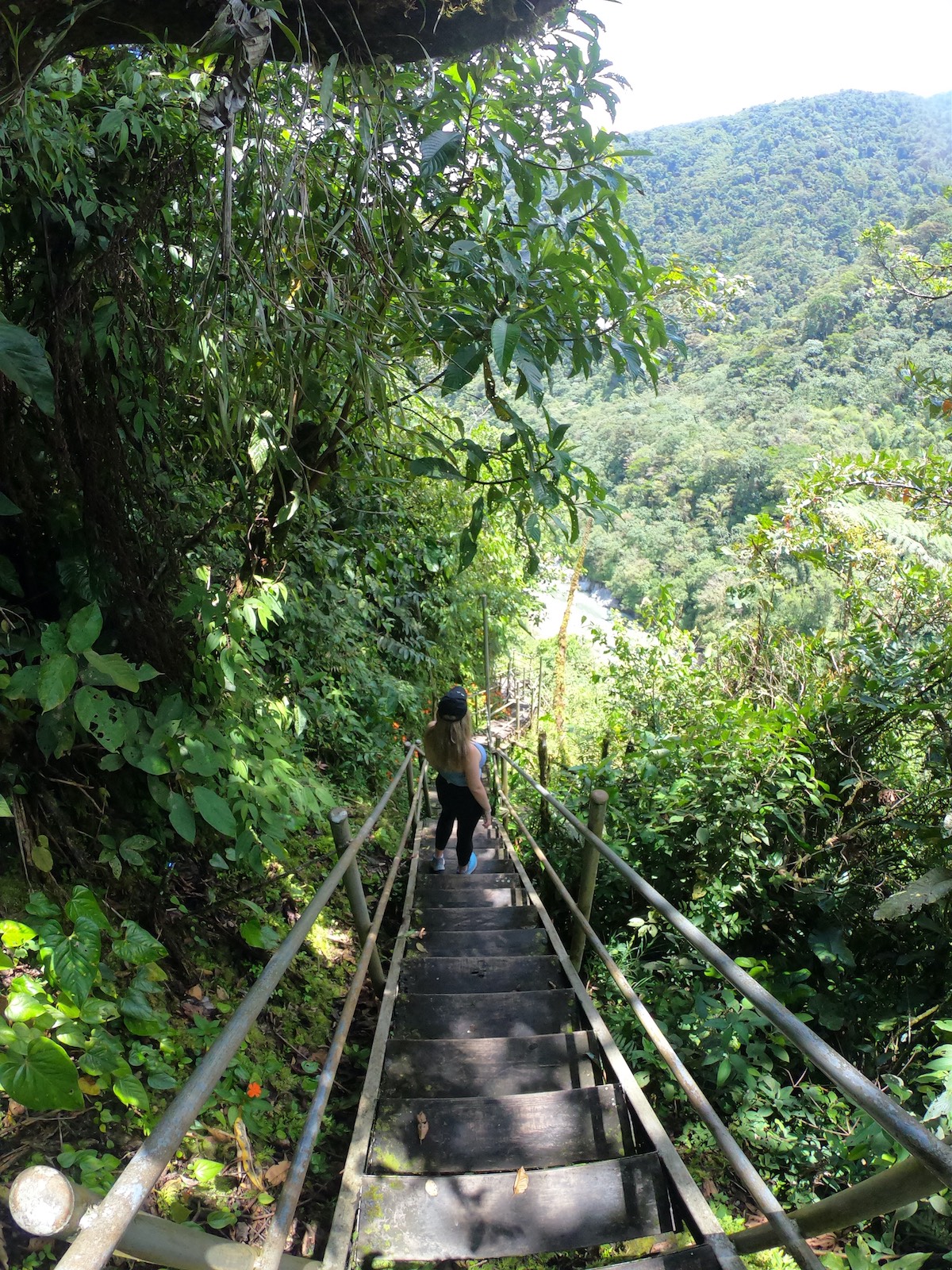
For the best swimming spots at Cascada Rocío Machay, we ventured toward the river and found safer pools that allowed us to cool off without the worry of being swept away by the current. The clear water felt refreshing against our skin, providing a perfect respite after a day of biking.
The climb back up to our bikes was a bit slower due to the steep hillside, but the effort was absolutely worth it. As we made our way up, we felt a sense of accomplishment, knowing we had enjoyed such a beautiful spot.
Once we reached the top, we discovered that shuttles typically run directly from this location back to Baños. However, since it was a quieter time and the sun was beginning to set, we decided to cycle back to El Pailón del Diablo. It was a scenic ride, and we knew we’d have a better chance of catching a shuttle there, thanks to the larger crowds. Plus, the thrill of biking through the lush landscape one more time was an adventure in itself!
How Do You Get To Cascada Ulba And Cascada Silencio?
Both waterfalls lie 150 meters off the main road on Calle Juan Montalvo, near the village of Ulba. Lock bikes at the entrance and walk about 10 minutes to Cascada Ulba. The trail can be muddy and slippery. Cascada Silencio is reached upstream, but its path becomes difficult after heavy rainfall. Puerto del Cielo also lies nearby.
To reach these two beautiful waterfalls, we ventured 150 meters off the main road onto a side street called Calle Juan Montalvo. As we approached the village of Ulba, we spotted a prominent sign advertising the waterfalls, which made it easy to find our way.
Once we arrived, we securely locked our bikes at the entrance and embarked on a 10-minute walk to Cascada Ulba. Although the trail wasn’t very well marked, we followed the well-trodden path with no issues. The earthy scent of the mud and the sounds of nature surrounded us, enhancing the anticipation of seeing the waterfall. Just a heads up—be prepared to get a bit muddy, as the path can be slippery, and you’ll definitely feel the spray from the waterfall as you get closer!
Cascada Silencio is also nearby, and to reach it, we followed the smaller river upstream after crossing it to get to Cascada Ulba. However, I should mention that the path to Cascada Silencio can become quite tricky during heavy rainfall, making it difficult, if not impossible, to access. We were lucky to visit on a dry day, allowing us to enjoy both waterfalls without any complications!
Other Waterfalls on Ruta de las Cascadas
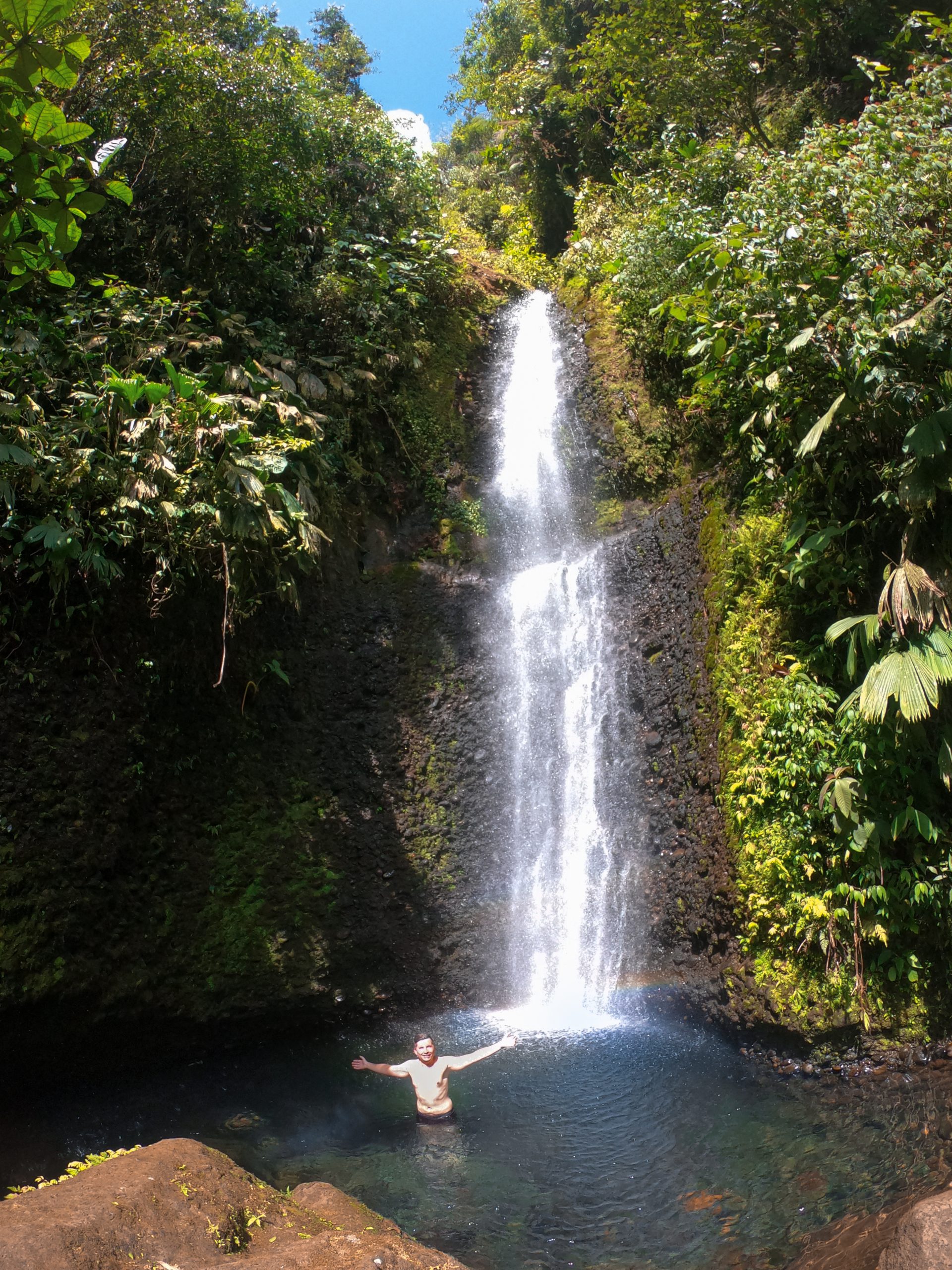
In addition to the prominent waterfalls we visited along the route, we discovered several other falls that were worth noting. Some of these smaller waterfalls were easy to spot as we cycled past, adding to the charm of the ride. Others required a bit of a detour, but the effort was well worth it for the serene views and the opportunity to enjoy a moment of tranquility in nature.
These waterfalls include:
- Puerto del Cielo Waterfall (located on the Pastaza River)
- Cascadas Rio Blanco
- Cascadas San Jorge
- Duende Waterfall (found in the same town as Pailón del Diablo)
- Cascada de San Francisco
How Do You Get Back To Baños From The Ruta De Las Cascadas?
We paid and hopped onto an open-backed truck with our bikes near the second entrance of Pailón del Diablo, east of the yellow bridge. Trucks depart once five people gather, and you can pay extra to fill remaining seats. If you cycled to Cascada Rocío Machay, return to the Diablo waterfall to catch the ride back to Baños.
You’ll be pleased to know that the return trip to Baños is quite convenient. For just USD 2.50, my wife and I were able to hop onto an open-backed truck that transported us back to the city along with our bikes.
We found these trucks near the second entrance of Pailón del Diablo waterfall, right east of the yellow bridge. If you’ve cycled to either Cascada El Rocío Machay or Cascada de San Francisco, you’ll need to make your way back to the Diablo waterfall to catch this ride.
The open-backed trucks depart once a group of five people is gathered, which makes it easy to connect with fellow travelers. However, if you’re eager to leave immediately, you can opt to pay a bit extra to fill any remaining seats. This flexibility made our return to Baños seamless and stress-free, allowing us to relax after a day full of adventure!
Is The Ruta De Las Cascadas Worth Adding To An Ecuador Itinerary?
The Ruta de las Cascadas offers waterfalls, adventure activities and scenery along a mostly downhill route east of Baños. Biking it is a must for anyone who loves nature and adventure. It deserves a full day if you cycle and stop at the falls, and it can be combined with time in Baños before continuing toward the Amazon.
The Baños Waterfall Route (Ruta de las Cascadas) truly offers a breathtaking journey through stunning waterfalls, adventure activities, and awe-inspiring scenery. Biking through this fantastic route is an absolute must for anyone who loves nature and adventure.
My wife and I had an exhilarating time exploring this waterfall route, and I highly recommend adding it to your Ecuador itinerary. It’s an experience that will leave you with unforgettable memories, surrounded by the beauty of nature!
Planning trip to Ecuador?
My wife and I spent 15 days traveling from the northern part of Ecuador to the south, 11 of them in a rental car, visiting amazing cities like Quito, Otavalo, Baños, Cuenca, and Guayaquil. Along the way, we explored iconic places such as Cotopaxi National Park, Quilotoa Lake, and many more breathtaking destinations.
Not many blogs cover traveling in Ecuador in detail, so I spent nearly three weeks creating this comprehensive Ecuador travel guide based on our trip. It’s packed with everything you need to know, and honestly, I consider it the best free travel guide about Ecuador out there.
If you’re planning a trip to Ecuador, don’t forget to use my link for discounted hotel prices through Booking.com. It’s a great way to support my blog while saving money on your accommodations!
Questions About The Ruta De Las Cascadas
What to do in Banos, Ecuador?
Cycle the Ruta de las Cascadas, the waterfall road east from Baños along the Pastaza River. It passes waterfalls, ziplines, cable cars, swings and a bungee jump. The first half is most manageable for a day of cycling and mostly descends from Baños.
Is there a Devil's Cauldron waterfall in Ecuador?
Yes, Pailón del Diablo, the Devil's Cauldron, is in Rio Verde. It has two separate entrances that do not connect: the new one leads to the higher platform with iconic stairs, the original goes closer, even behind the falls. Daytime entry costs USD 3 for adults and USD 2 for children.
What is the largest waterfall in Ecuador?
Pailón del Diablo, about 80 m high, is described as Ecuador's largest waterfall since the San Rafael (Coca) Falls disappeared in 2020.
Is Banos, Ecuador worth visiting?
Baños is a picturesque town in the Andes, known as the Gateway to the Amazon. Its natural beauty is captivating, and it is the starting point for the Ruta de las Cascadas, the Baños Waterfall Route, a rewarding day trip for nature and adventure.