El Chato Tortoise Reserve (Turtle Ranch) in Santa Cruz Island, Galapagos
Quick Facts About El Chato Tortoise Reserve
| Where | The highlands of Santa Cruz, above Puerto Ayora |
|---|---|
| Who runs it | A private reserve owned by the Arias family, not the national park |
| Entry | About USD 10 per person, paid before entering (secondary sources; no official page) |
| What you see | Wild giant tortoises grazing and resting in mud ponds, plus Darwin's finches and the vermilion flycatcher |
| Also on site | Lava tunnels, a small café, a store and restrooms |
Our Take On El Chato Tortoise Reserve
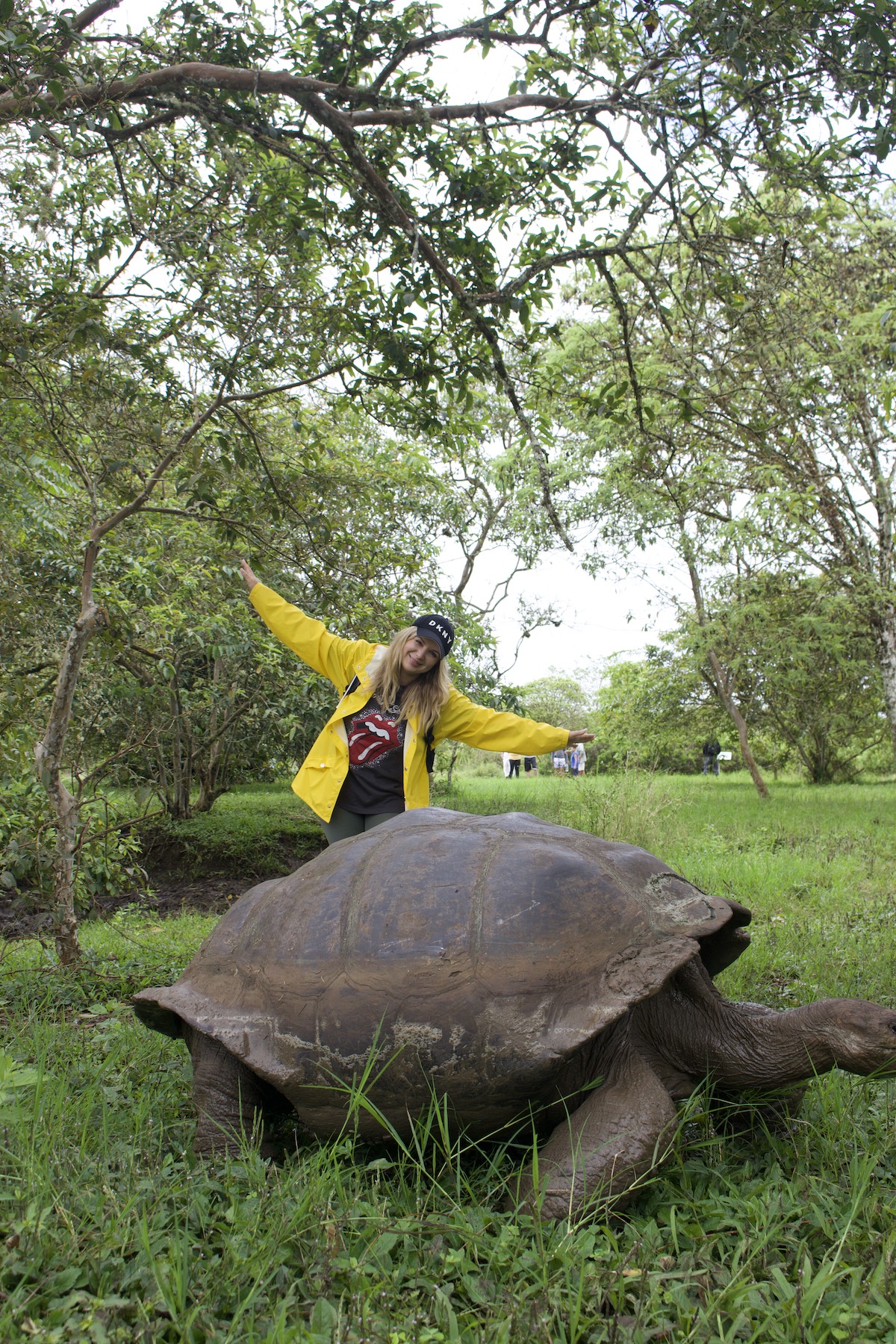
I watched giant tortoises lounging in mud ponds and grazing on fresh green shoots at El Chato Tortoise Reserve on Santa Cruz Island. We arranged a guided journey to the highlands, visiting the Los Gemelos Twin Craters, the reserve, and lava caves. We spotted Darwin finches and the vermilion flycatcher as we walked around. Exploring the massive lava tunnels in the reserve was one of the highlights of our visit.
The giant tortoise is one of the most iconic animals in the Galapagos. My visit to the Galapagos Islands wouldn’t have felt complete without checking them off my Galapagos bucket list, and El Chato Tortoise Reserve proved to be one of the best places to do just that. In fact, visiting this reserve on Santa Cruz Island became one of the most memorable parts of my trip.
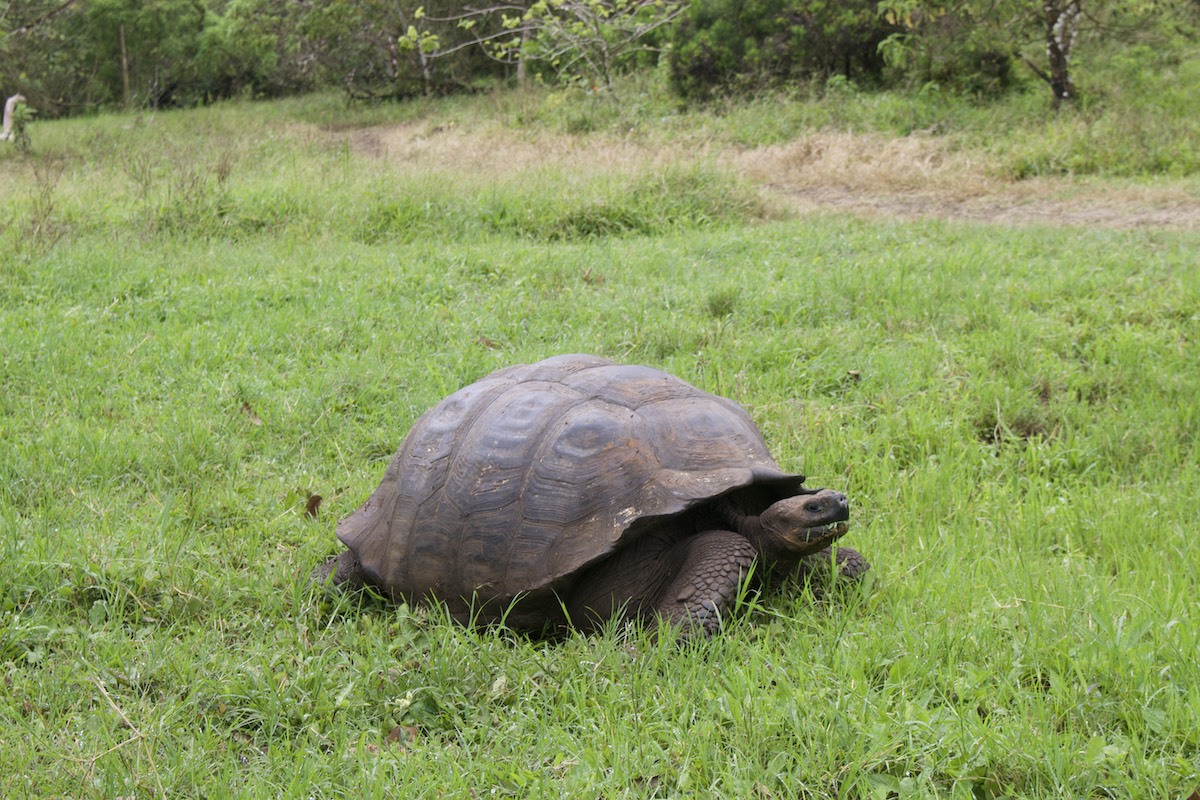
El Chato is a natural reserve nestled in the mountains of Santa Cruz, known as a grazing ground for Galapagos Giant tortoises. These remarkable creatures pass through on their endless migrations from the coast to the highlands, making El Chato one of the rare places where they can be seen freely roaming in their natural habitat.
It was amazing to watch them lounging in mud ponds, grazing on fresh green shoots, and wandering this expansive reserve. And just how big are they? Galapagos giant tortoises can reach up to 5 feet in length and weigh over 550 pounds (250 kilos). It was truly awe-inspiring to be in the presence of such a spectacular tortoise!
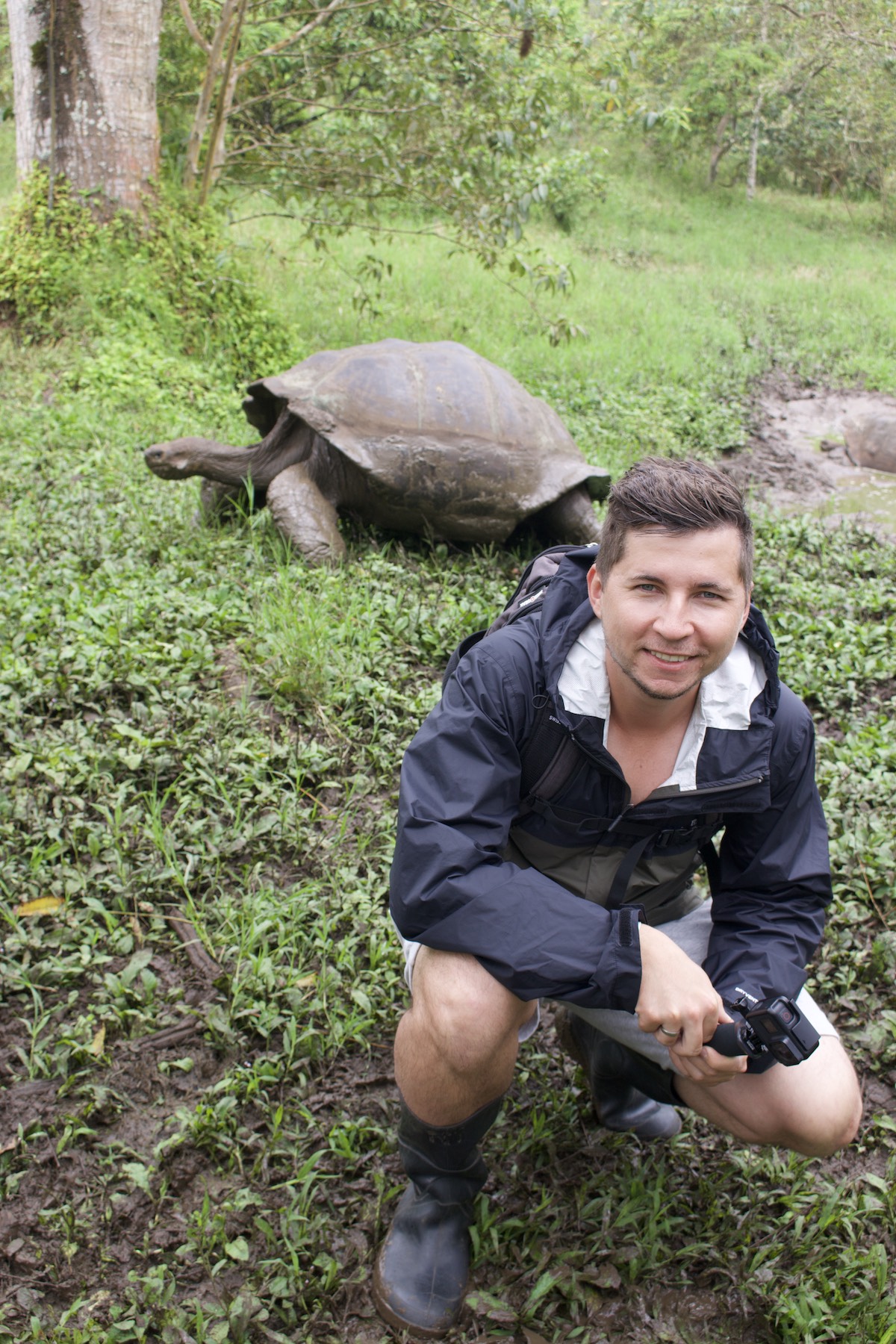
The reserve spans thousands of square meters filled with high grasslands and unique Scalesia trees, a rare and beautiful plant native to the Galapagos. These lush highlands provide a haven not only for the giant tortoises but also for various bird species. As we walked around, we spotted vibrant Darwin finches and the striking vermillion flycatcher. El Chato is also one of the best spots in the islands to catch a glimpse of the Galapagos short-eared owl, which is another species unique to this archipelago.
How Do You Get To El Chato Tortoise Reserve From Puerto Ayora?
The reserve lies about 22 kilometers from Puerto Ayora. We arranged a guided cab journey to the highlands, including the Los Gemelos Twin Craters, El Chato Tortoise Reserve and lava caves. The private reserve charges about USD 10 per person (secondary sources), and the guides work as volunteers, so tipping at the end is a thoughtful gesture.
The distance between Puerto Ayora and El Chato tortoise reserve is approximately 22 kilometers. We spotted some of the giant turtles right on the road!
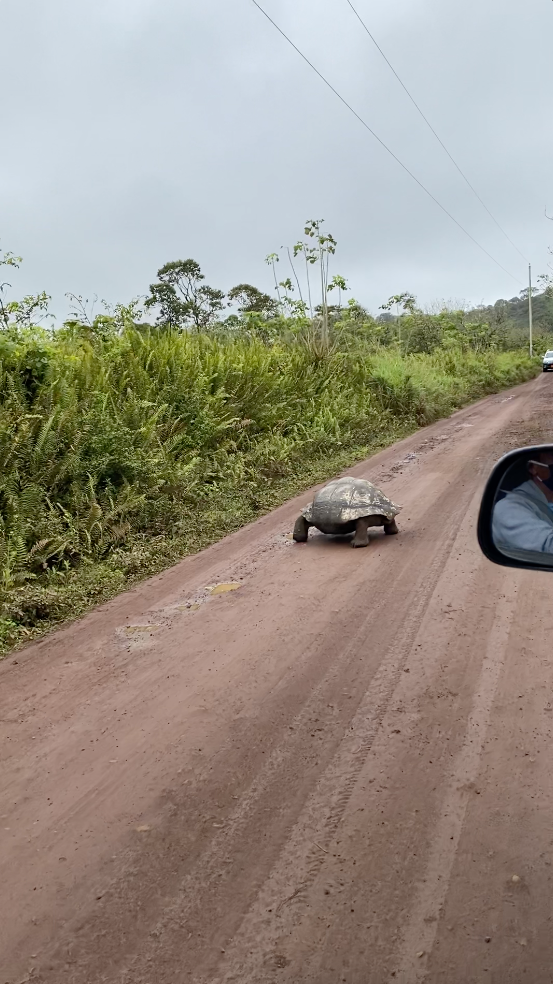
To reach El Chato, we arranged a guided journey to the highlands. For $35, a cab took us from Puerto Ayora to explore the Los Gemelos Twin Craters, El Chato Tortoise Reserve, and lava caves. Keep in mind that the reserve is private and charges about $10 per person, and the guides work as volunteers, so tipping at the end is a thoughtful gesture.
If you’d rather explore solo, you can still hire a cab for a 20-minute ride to El Chato. Many drivers will adjust their fee to include waiting time if asked. Alternatively, renting a bike is also an option, with plenty of tour shops on Puerto Ayora’s main street offering rentals. We suggest starting early to beat the heat on the uphill journey, making the downhill ride back a refreshing end to the trip.
Where Can I See Giant Tortoises In Galapagos?
El Chato Tortoise Reserve in the Santa Cruz highlands is one of the places where wild giant tortoises roam freely. The reserve has mud ponds where tortoises cool off, plus Scalesia forests. Since tortoises roam, we found it helpful to ask the staff where tortoises had been spotted that day, which made for great photo moments.
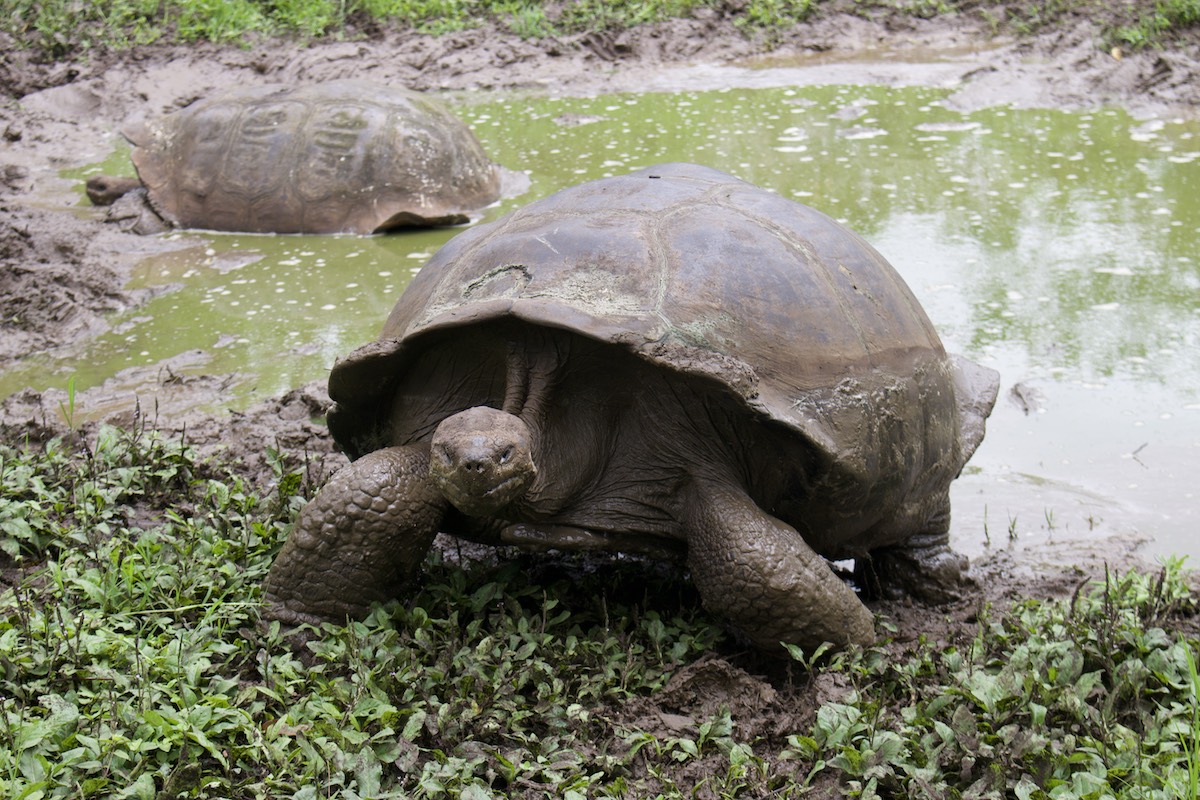
The expansive 12-hectare area of El Chato Reserve is a paradise for tortoises, with lush grasslands and Scalesia forests, plus plenty of muddy ponds where these giants can cool off from the midday heat.
El Chato is divided into two main areas: La Caseta and Cerro Chato. La Caseta takes you to mud ponds where tortoises love to relax, while the Cerro Chato trail offers a scenic hike leading to a stunning overlook of the island and ocean. Since the area is vast and tortoises often roam, we found it helpful to ask the staff where tortoises had been spotted that day—boosting our chances of close encounters with these magnificent creatures.
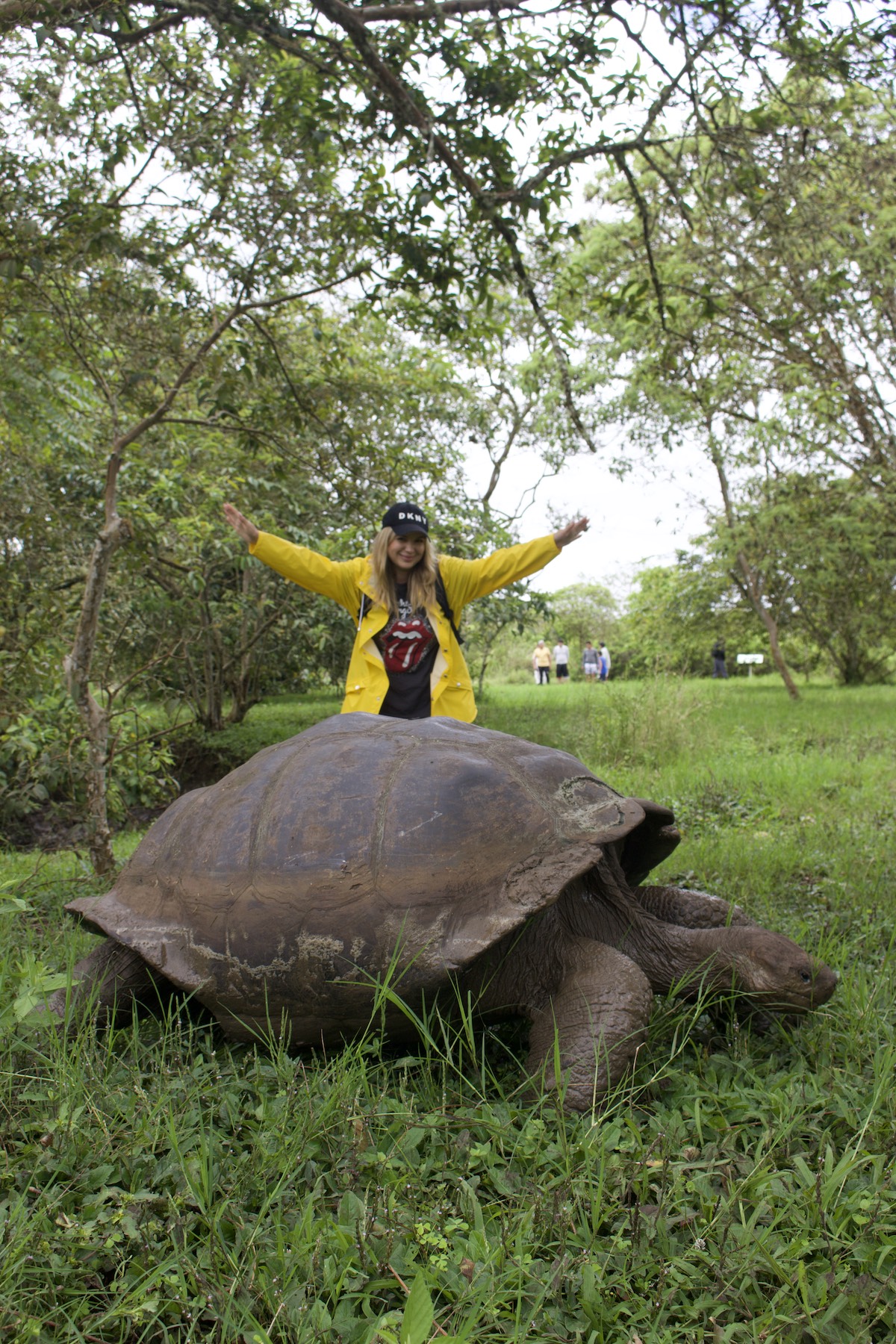
The Galapagos tortoises at El Chato seemed perfectly at ease around us, which made for some fantastic photo moments. We couldn’t resist capturing as many shots as we could of these gentle giants.
El Chato also turned out to be an ideal spot for birdwatching. We spotted Darwin’s Tree and Ground finches darting through the trees, along with the striking vermilion flycatchers and yellow warblers. Though we’d heard that short-eared owls are occasionally sighted here, we weren’t lucky enough to see one this time. Santa Cruz Highlands are also known for other species like white-cheeked pintails, Cattle egrets, and the elusive Galapagos rails.
One of the highlights was exploring the massive lava tunnels in the reserve. These underground tubes, illuminated for safe passage, gave us a fascinating glimpse into the island’s volcanic history. A few larger tunnels required descending by ladder, which added a little adventure to our visit and was well worth the effort.
What Should You Know Before Visiting El Chato Tortoise Reserve?
The paths are often overgrown, muddy, and slick, so wear hiking or walking boots and bring drinking water. The reserve has a small café, a store, and restrooms, and can lend footwear in bad mud. Entry is about USD 10 per person, paid before entering, according to secondary sources. Bring rain gear and sun protection for the unpredictable highlands weather.
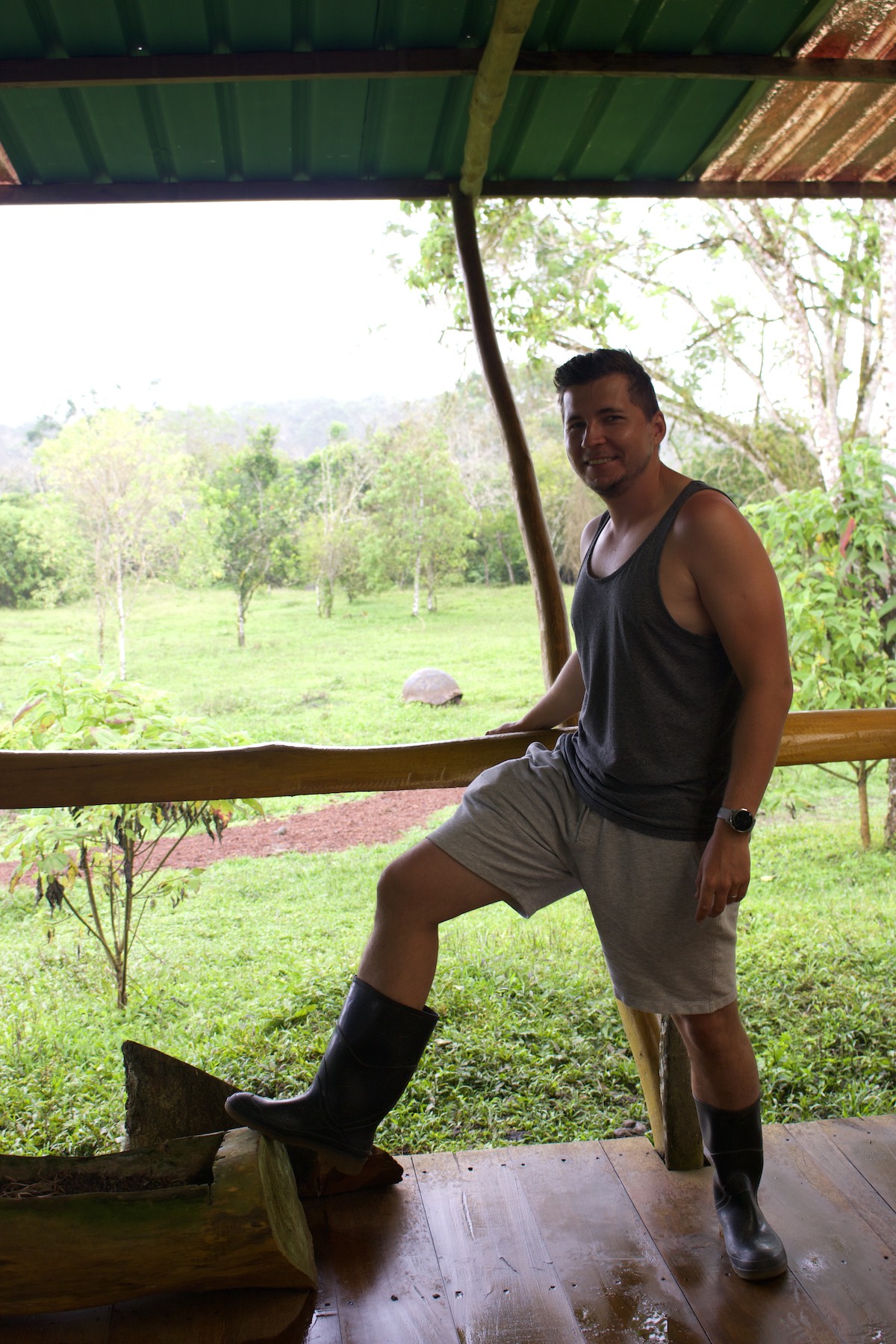
- The paths here are frequently overgrown, muddy, and slick. Wear a nice pair of hiking or walking boots and take it slowly! If the mud is exceptionally terrible, the reserve can supply footwear as we did.
- Stick to the paths since getting lost at the reserve is simple. Two persons have gone astray in recent years, with one resulting in death.
- Bring lots of drinking water with you. There is also a small café, store, and restrooms on-site.
- Because the weather in the highlands is unpredictable, it is important to be prepared for everything. Bring rain gear as well as sun protection.
- The El Chato tortoise reserve is open daily from 08:00 a.m. to 5:30 p.m. Most visitors expect to spend a couple of hours exploring the facility and viewing the tortoises. The admission fee is about $10 per person, paid before entering the premises.
- Visitors may climb into an empty tortoise shell on display at the ranch and do their best tortoise impersonation for a funny and amusing photo opportunity.
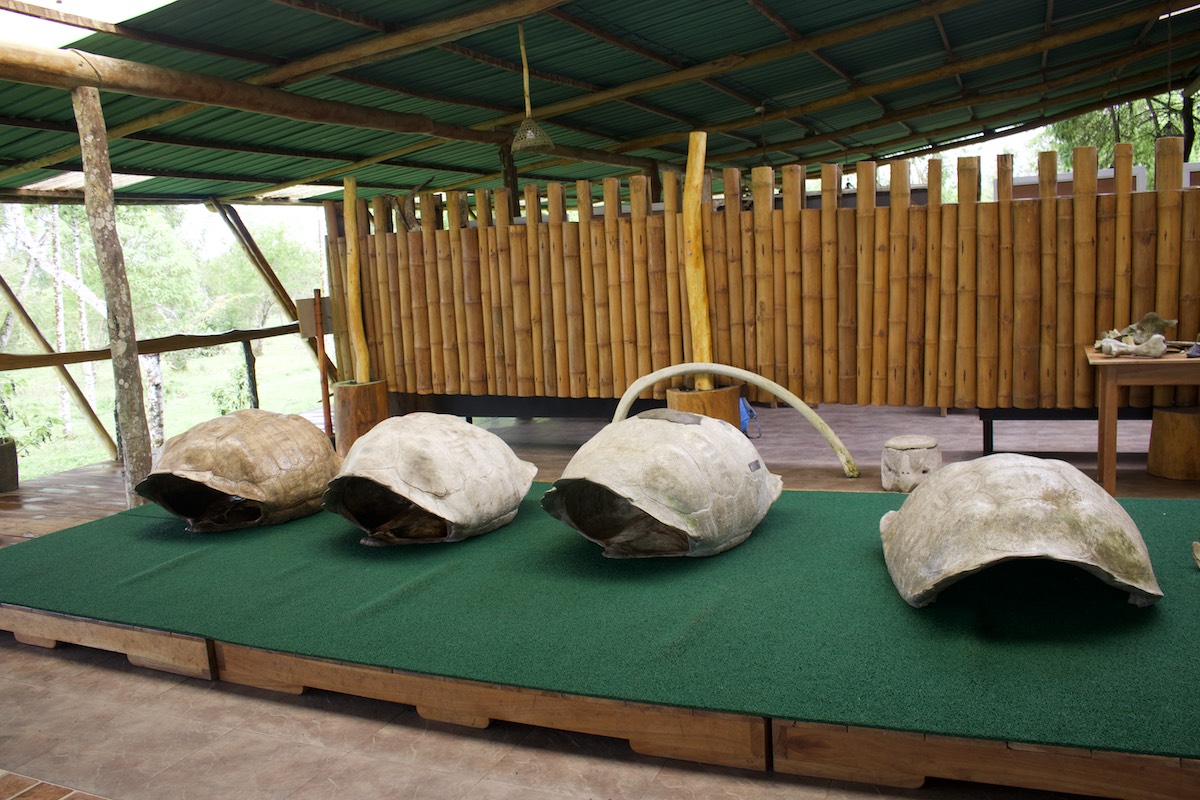
- Some visitors combine a visit to El Chato Reserve with a visit to the Los Gemelos Twin Craters, which are also located in the Santa Cruz Highlands. Taxi drivers would gladly give you a fee that includes waiting time at each location.
Is El Chato Tortoise Reserve Worth Visiting?
During our visit to El Chato, we gained an appreciation for the significance of the giant tortoise in the Galapagos Islands. The reserve stands out as a unique sanctuary where these gentle giants roam freely in a protected environment. If you are considering Santa Cruz Island, we highly recommend making El Chato a priority.
During our visit to El Chato, we truly gained an appreciation for the significance of the Giant Tortoise in the Galapagos Islands. El Chato Tortoise Reserve stands out as a unique sanctuary where these gentle giants roam freely in a protected environment. If you’re considering visiting Santa Cruz Island, we highly recommend making El Chato a priority—it’s one of those places where you can experience these remarkable tortoises in their natural habitat.
Whether you’re traveling solo or with a group, this reserve is a must-see! Be sure to book your tour in advance to secure this unforgettable experience.
Planning trip to Galapagos Islands?
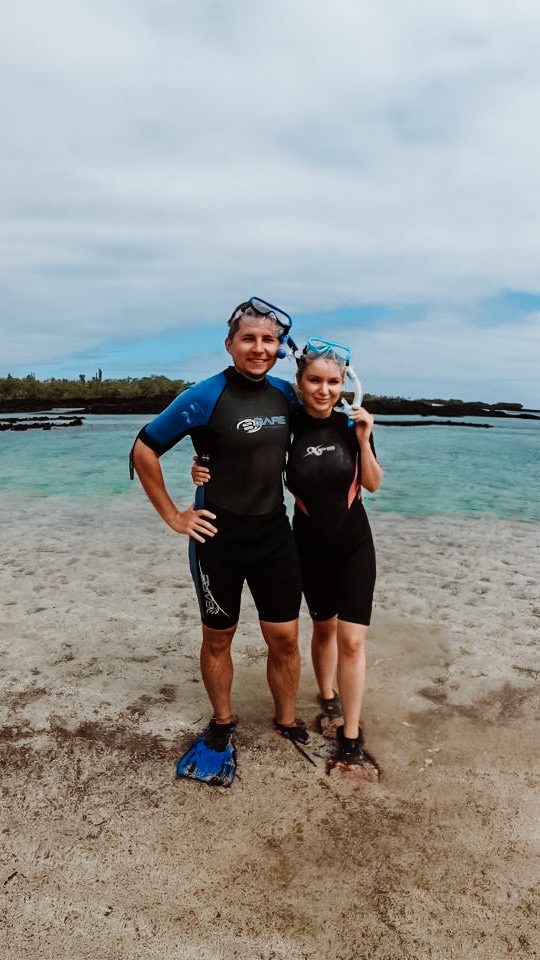
My wife and I spent two weeks on these magnificent islands, visited nearly every possible tour, and explored as much as we could. I shared all the important details in my comprehensive Galapagos Islands Travel Guide, where I cover everything you need to know about planning a trip to the Galapagos.
Galapagos Islands travel might surprise you with extra fees to enter the islands, the complicated logistics between islands, booking tours, and knowing which spots are free to explore and which ones are not. I’ve covered it all in this Galapagos Travel Guide.
Also, if you’re planning a trip to the Galapagos, make sure to use my link for discounted hotel prices via Booking.com. It really helps support my blog!
Questions About El Chato Tortoise Reserve
Where is the best place to see giant tortoises in the Galapagos Islands?
El Chato Tortoise Reserve on Santa Cruz Island is one of the best places to see giant tortoises. It is a private reserve where the tortoises roam freely in their natural habitat on their migrations between the coast and the highlands.
Are there lava tunnels in the Galapagos Islands?
Yes, El Chato Reserve has massive lava tunnels, illuminated for safe passage, offering a glimpse into the island's volcanic history. A few larger tunnels require descending by ladder.
What is the entrance fee for the Galapagos Islands?
The Galapagos National Park entrance fee is USD 200 for foreign adults and USD 100 for foreign children under 12, paid in cash on arrival at Baltra or San Cristóbal airport. El Chato is a private reserve and is charged separately, at about USD 10 per person (secondary sources).